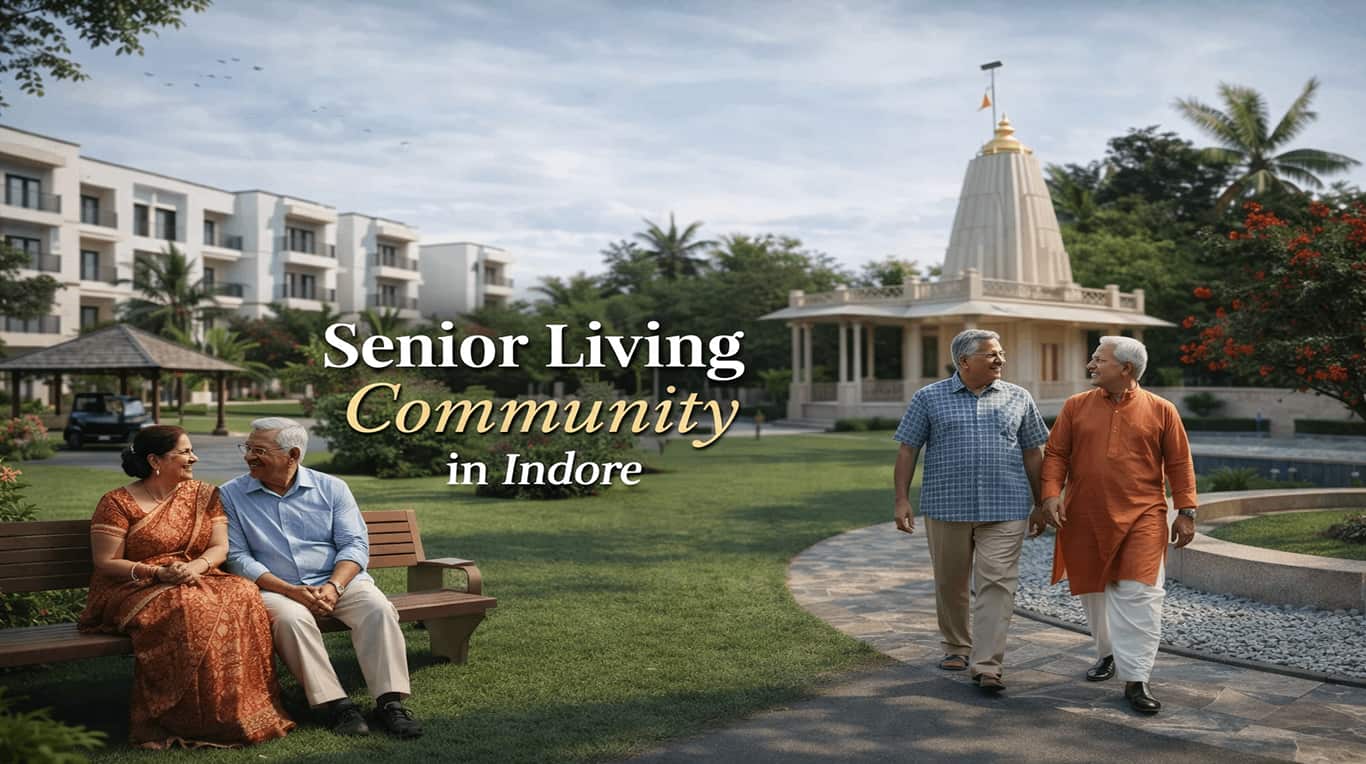
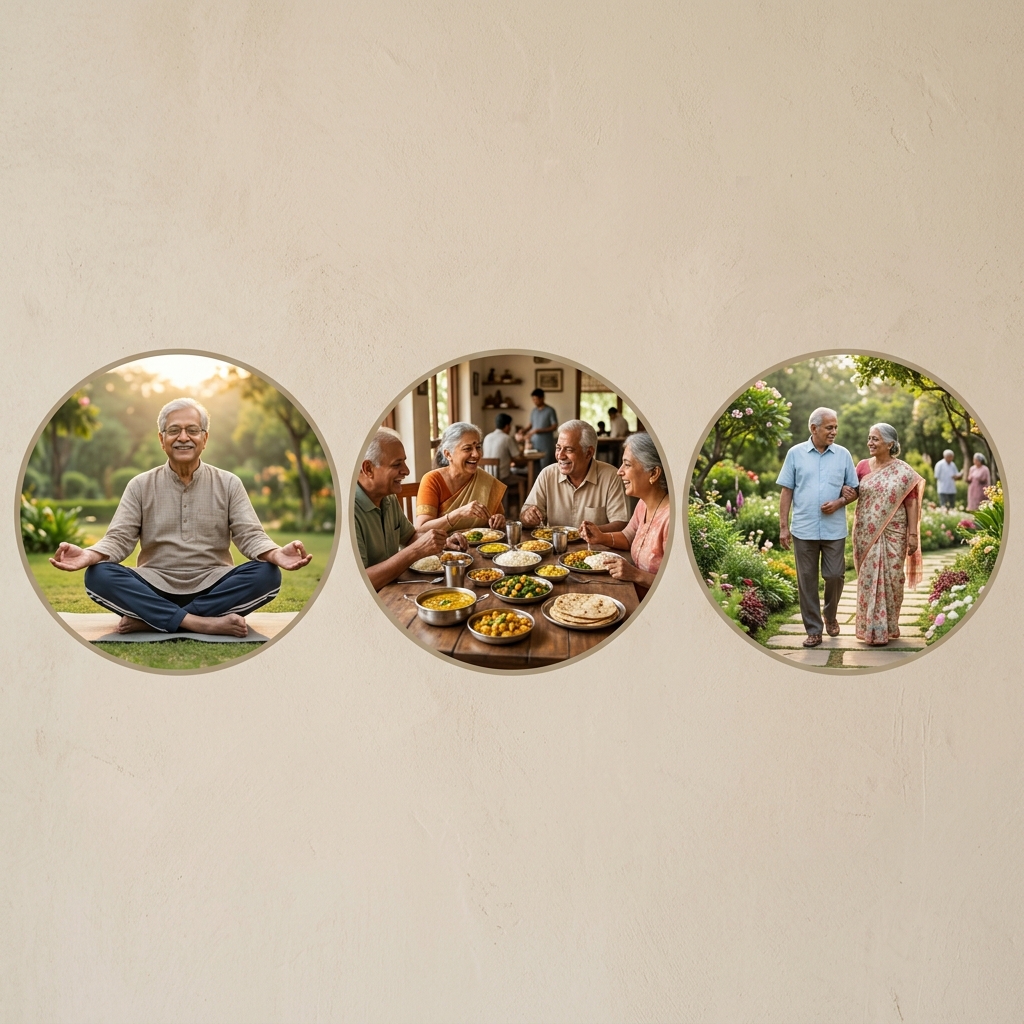
When families look for a retirement home, their primary concern is often how their parents will spend their days. The senior living daily routine india has evolved significantly, shifting from passive care to an engaging, lifestyle-driven experience. Premium communities now prioritize physical health, mental stimulation, and emotional fulfillment through a carefully curated schedule.
A well-planned daily schedule ensures residents maintain their independence while receiving support exactly when they need it. This structured yet flexible approach is what makes modern senior living communities so appealing to educated Indian professionals. Moving to a community does not mean giving up your freedom; it means embracing a purposeful lifestyle without the heavy burden of household chores.
Morning: Waking Up to Wellness and Spirituality
The day usually begins early, aligning with the natural rhythms of most older adults. Around 6:30 AM, residents gather in the landscaped gardens or dedicated wellness spaces. Moving your body first thing in the morning is a core part of an active ageing community lifestyle.
Walking alone on busy city streets can be risky for seniors due to uneven pavements and traffic. Inside a gated community, the environment is secure, flat, and monitored. Staff are always nearby, ensuring safety while respecting privacy.
Here is what a typical morning looks like:
- Guided physical activity: Options include yoga, light stretching, supervised walks, swimming, and pickleball. These sessions are tailored to individual mobility levels, ensuring everyone can participate safely.
- Medical check-ins: For those requiring assistance, trained nurses help with morning medication or check vital signs like blood pressure before breakfast.
- Nutritious breakfast: A communal dining experience where chefs serve fresh, easily digestible Indian breakfasts. You will find familiar options like poha, upma, idli, or customised diet plates for specific health conditions.
- Spiritual time: Many communities feature quiet spaces, prayer rooms, or scheduled bhajan sessions. For residents who value their spiritual practices, this dedicated time brings immense peace.
This early engagement sets a positive tone for the rest of the day. Families find comfort knowing their parents are starting their morning safely and healthily, surrounded by friends rather than an empty house.
Active Sports and Recreation
If guided walks or yoga do not appeal to you, there are other ways to stay moving. Swimming lessons are very popular. The water takes the pressure off joints, so it is a comfortable way to build strength. Some residents just enjoy being in the pool.
Pickleball has caught on quickly in recent years. The smaller courts make the game easier to pick up than traditional tennis, but you still get a good workout. Residents often organize friendly matches in the morning before it gets too hot outside.
For an indoor option, table tennis is a dependable choice. It is easy on the knees and helps maintain hand-eye coordination. The games often get surprisingly competitive, and they are a good way to share a few laughs with neighbors.
Midday: Cognitive Stimulation and Skill Building
After breakfast, the focus shifts to mental and social engagement. Staying intellectually active is just as important as physical health. Most premium assisted living facilities in India organize a variety of optional activities designed to challenge the brain and encourage learning.
Residents can join a literature club, participate in a gardening workshop, or attend guest lectures on topics ranging from history to personal finance. Technology workshops are particularly popular. Here, seniors learn how to confidently use smartphones, order groceries online, or navigate video calls with their grandchildren overseas.
Some might prefer to spend this time reading the newspaper in a sunlit lounge or playing a game of carrom with a neighbour. The key here is choice. Nobody is forced to participate, but the opportunities are always available when they want them.
Experience a Purposeful Retirement Routine
See how our structured daily programmes improve physical and emotional well-being at CHL Urja.
Learn About Our ProgrammesNutrition and Diet Management
Food is a central part of Indian culture, and retirement communities take it seriously. However, as we age, our dietary needs change. Preparing three nutritious, medically appropriate meals a day is exhausting for a senior living independently.
In a managed community, executive chefs and clinical dieticians work together. They plan menus that are low in sodium and healthy fats but high in flavour and essential nutrients. If a resident requires a diabetic-friendly diet, a soft-food diet, or strictly Jain meals, the kitchen accommodates these needs seamlessly.
Lunch is typically served between 12:30 PM and 1:30 PM in a communal dining hall. Sharing a meal with peers turns an ordinary routine into a social event, encouraging better eating habits and reducing the risk of malnutrition.
Afternoon: Rest, Recovery, and Personal Hobbies
Following lunch, the community embraces a quieter atmosphere. Rest is essential for older adults to maintain their energy levels throughout the day.
During this time, some residents take a nap in their private apartments, while others might spend time calling their families, watching television, or pursuing individual hobbies like knitting, painting, or writing. The environment is peaceful and relaxed.
If a resident has scheduled physiotherapy sessions or consultations with visiting doctors, the afternoon is usually when these take place. The senior care routine is integrated so naturally into the day that medical check-ups feel like a standard part of life rather than a stressful hospital visit.
Evening: Social Gatherings and Entertainment
As the sun begins to set, the community comes alive again. The evening tea is a staple of Indian culture, and in a retirement home, it serves as the perfect social anchor. Residents gather in common areas or outdoor seating spaces to discuss the day, share stories, and debate current events over a hot cup of chai.
Many communities organise light entertainment during this time. This could be a musical performance, a movie screening, or a festive celebration. Indian festivals like Diwali, Holi, and regional new years are celebrated with great enthusiasm, bringing everyone together like a large extended family. This constant stream of social interaction is the strongest defence against loneliness and depression.
A Typical Daily Schedule Summary
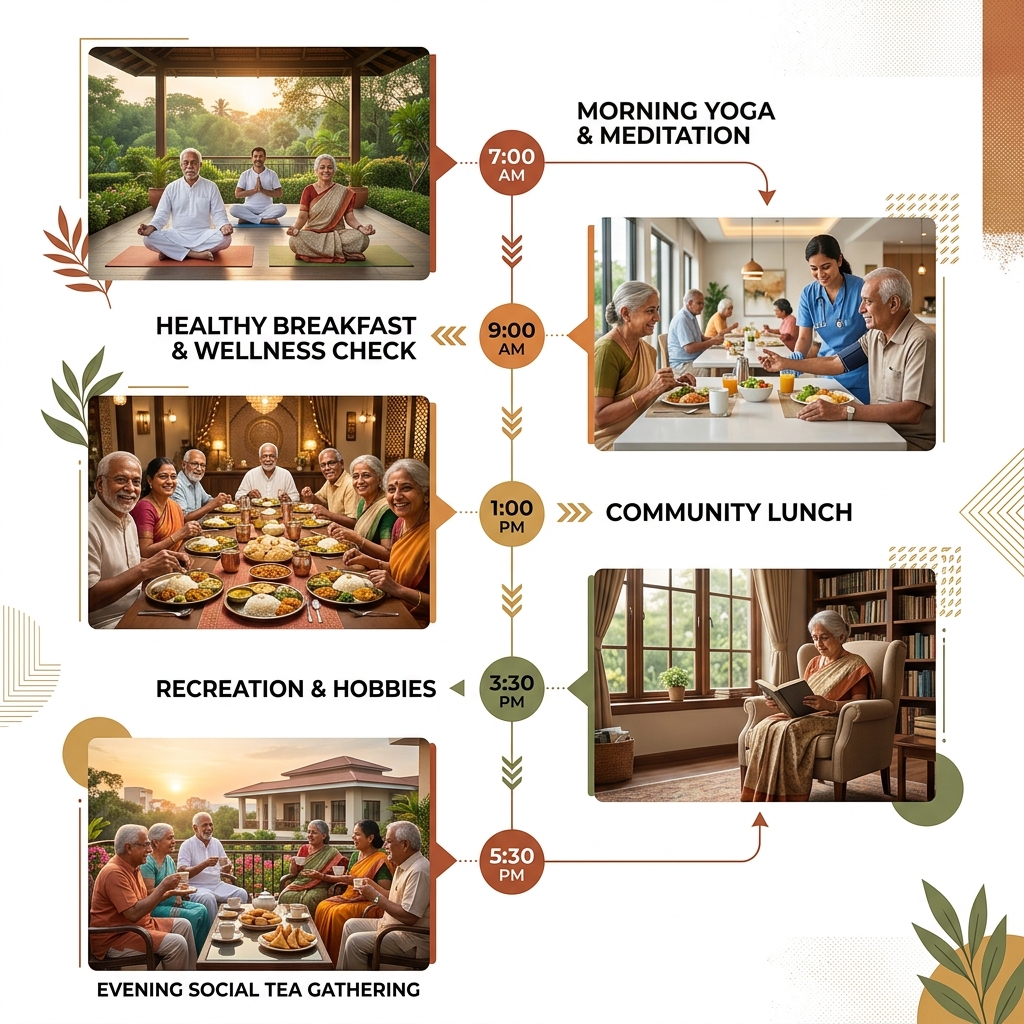
While every resident's routine is highly personal, here is a general overview of a structured day in a premium community:
| Time | Activity Category | Example Activities |
|---|---|---|
| 6:30 AM - 8:00 AM | Morning Wellness & Sports | Yoga, swimming, pickleball, vital checks |
| 8:00 AM - 9:30 AM | Breakfast & Socialising | Communal dining, reading newspaper |
| 10:00 AM - 12:30 PM | Mental Stimulation | Art classes, tech workshops, guest lectures |
| 12:30 PM - 1:30 PM | Lunch | Balanced, dietician-approved meals |
| 2:00 PM - 4:00 PM | Rest & Personal Time | Napping, reading, family calls, physiotherapy |
| 4:30 PM - 6:30 PM | Evening Activities | Evening tea, table tennis, musical events |
| 7:00 PM - 8:30 PM | Dinner & Wind Down | Early dinner, television, preparing for bed |
Why a Structured Routine Matters for Seniors
Living without a routine often leads to isolation and cognitive decline. When seniors manage a household alone, the sheer effort required for basic chores, like managing maids, cooking, and paying bills, often leaves little energy for hobbies or socialising. In contrast, a managed community handles all the logistics of daily living, allowing residents to embrace a vibrant lifestyle and actually enjoy their time.
This structure also provides immense peace of mind for families. Knowing that trained professionals are monitoring your parent's daily routine, ensuring they eat well, take their medications on time, and stay socially active, is a significant relief for adult children living in different cities or abroad.
Secure a Safe and Joyful Future for Your Parents
Explore our thoughtfully designed living spaces and daily wellness programmes at CHL Urja.
Contact Our Team TodayFrequently Asked Questions
1. Are residents forced to participate in daily activities?
Not at all. While communities encourage participation to prevent isolation, residents have complete freedom to choose which activities they attend. Independence and personal preference are always respected.
2. What happens if a resident needs medical help during the day?
Premium communities like CHL Urja have 24/7 medical assistance available on campus. Whether it is a routine check-up or a sudden medical emergency, trained healthcare professionals are on-site to provide immediate care and coordinate with local hospitals if necessary.
3. Can family members visit and participate in the daily routine?
Yes, family visits are highly encouraged. Relatives can often join residents for meals, participate in special festival celebrations, or simply spend quality time relaxing in the community lounges or private apartments.