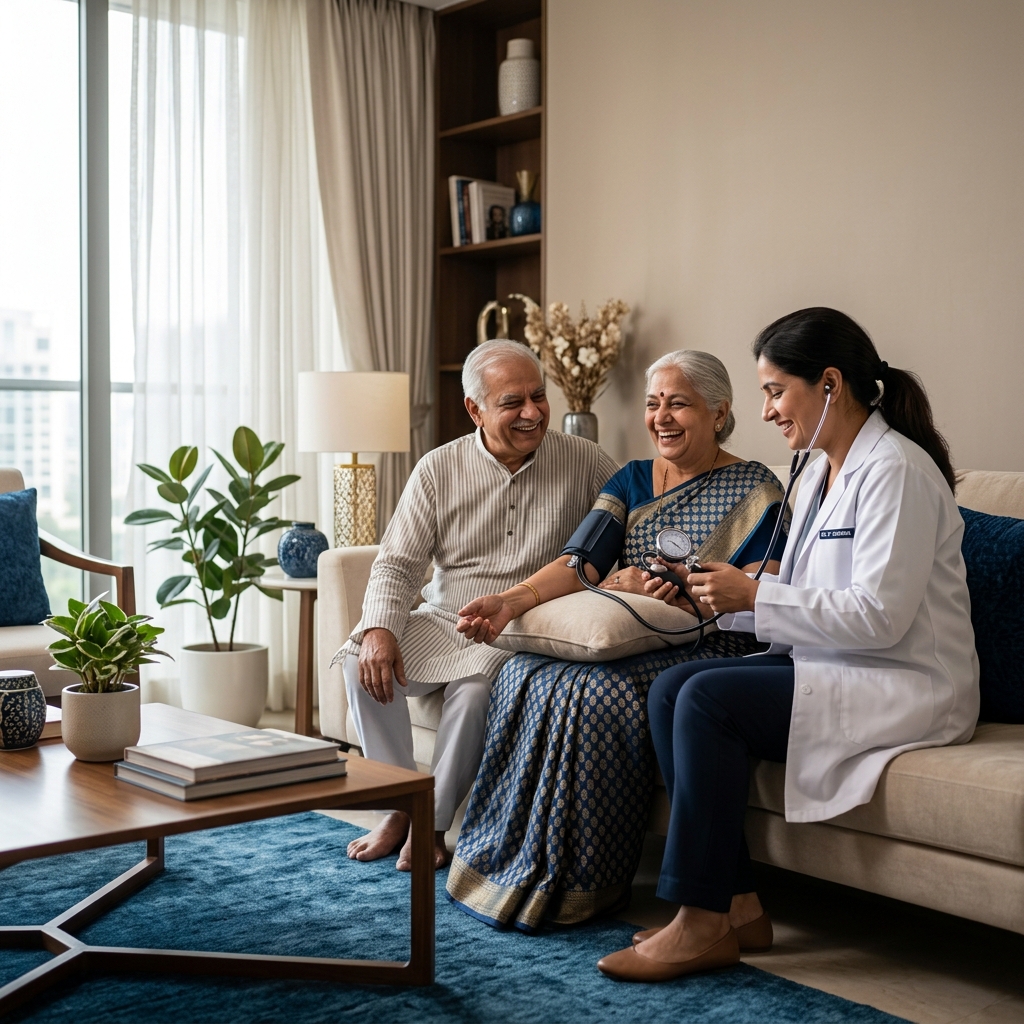
Every minute counts during a cardiac event or a sudden fall. When parents live alone, the logistics of calling an ambulance, reaching the right hospital and coordinating with doctors can become a nightmare. This is why families are entirely rethinking how they plan for their parents' later years. Relying on neighbours or distant relatives during a health crisis is simply not a practical long-term strategy.
Understanding the standard of medical care in senior living homes in India is the most important step in securing their future. A premium community does not just offer a place to stay. It provides a complete healthcare ecosystem. It is a space where ageing is supported by experts, so residents live with absolute dignity and their children live with peace of mind.
Why Basic Clinics Are Not Enough Anymore
Local neighbourhood clinics lack the specialised equipment and 24/7 availability required for geriatric emergencies. Premium senior living communities address this gap by providing in-house medical centres, round-the-clock nursing staff and dedicated ambulances, providing immediate intervention without the delays common in standard residential areas.
Most independent seniors currently rely on a family doctor or a nearby clinic for their medical needs. While this works well for minor ailments like a seasonal cold, it fails completely during a real emergency.
Consider a situation where an elderly person experiences a severe drop in blood sugar or a sudden stroke. A local clinic will likely ask them to go to a larger hospital. Calling a private ambulance takes time. Navigating city traffic takes more time. During these critical moments, the delay can cause irreversible damage.
In contrast, an organised community provides immediate, on-site intervention. The medical team already knows the resident's medical history, allergies and current medications. There is no time wasted in explaining the background to a new doctor. This proactive approach is what separates a true senior living facility from a regular housing complex.
The Shift from Traditional Old Age Homes to Hospital-Backed Communities
Traditional old age homes generally focus on providing basic food and shelter, often neglecting specialised geriatric healthcare. Modern senior living communities in India have shifted the focus toward active aging, combining preventive health programmes and hospital-grade emergency support to maintain residents' independence and dignity.
For a long time, the concept of elder care in India was limited to traditional old age homes. These places carried a social stigma because they were often institutional and depressing. More importantly, their medical facilities were usually restricted to a visiting doctor who came once a week.
Today, independent seniors demand better. They want to live in spaces that celebrate their independence while quietly providing a safety net. This has led to the rise of hospital-backed senior living communities.
These modern campuses operate on a completely different philosophy. Instead of waiting for a resident to fall ill, they focus on preventive health. They conduct regular health camps, monitor vitals and adjust dietary plans based on individual needs. The lifestyle in premium senior living communities is active and positive. Residents spend their time engaging in hobbies, knowing that a fully equipped medical team is just a button press away if anything goes wrong.
Don't Leave Their Health to Chance
Discover how CHL Urja's hospital-backed medical infrastructure provides maximum safety for your parents.
Explore Our Healthcare FacilitiesKey Pillars of Medical Care in Senior Living Homes in India
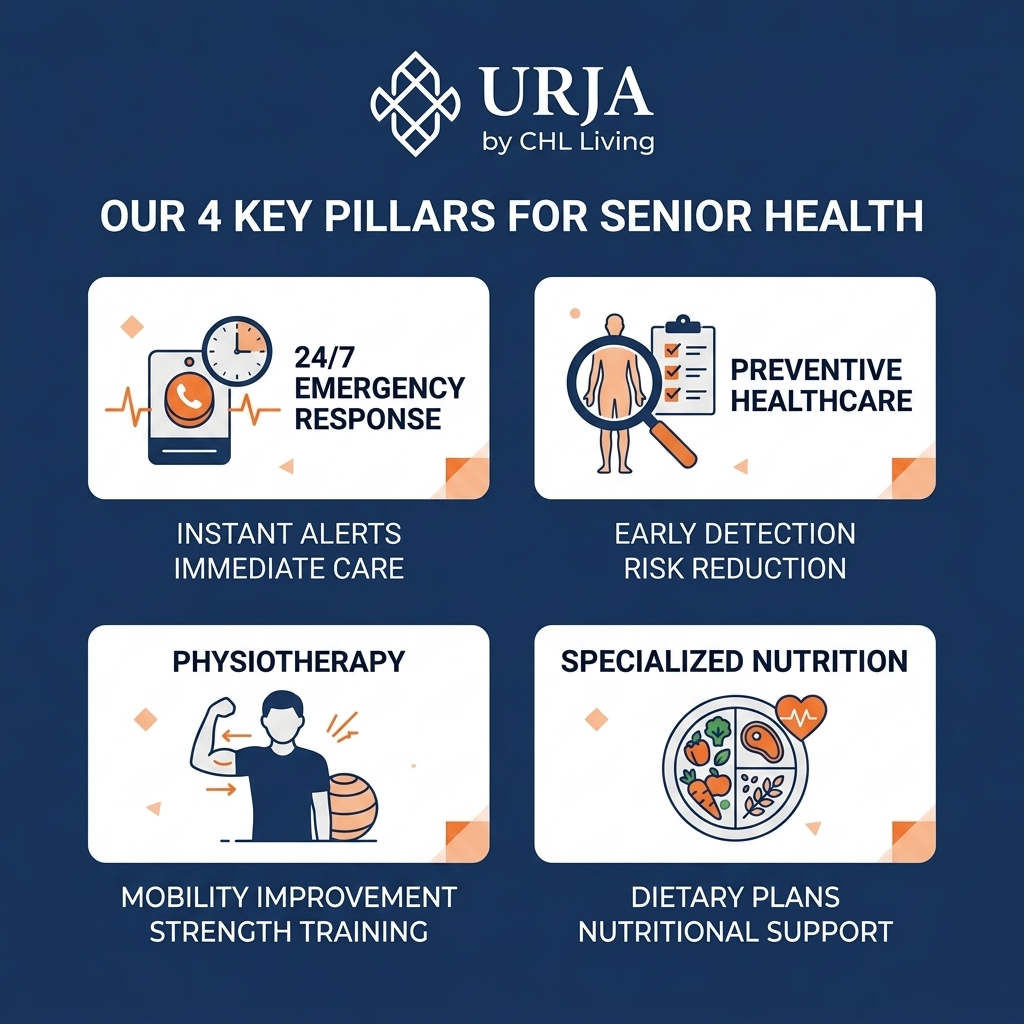
The foundation of reliable medical care in senior living homes in India rests on continuous monitoring, rapid emergency response and complete rehabilitation. Evaluating these specific pillars helps families choose communities that truly protect their parents' physical and mental well-being over the long term.
When you are visiting a prospective community, do not just look at the clubhouse or the landscaping. The real value of the property lies in its medical preparedness. Ask direct questions about their healthcare protocols. Here are the core elements you must verify.
1. 24/7 Emergency Response Systems
Advanced emergency response systems feature panic buttons in every room, wearable health monitors and an on-campus ambulance. This guarantees that trained medical professionals reach the resident within minutes during any critical health event, lowering the risk of severe complications.
An emergency does not announce itself. It can happen in the middle of the night or while someone is taking a shower. Premium facilities design their physical spaces specifically to handle these situations.
Look for apartments fitted with emergency pull-cords or panic buttons in the bedroom and bathroom. When pressed, these buttons immediately alert the on-site medical centre. Having an ambulance stationed permanently on the campus is non-negotiable. If a resident requires advanced critical care, the on-site nursing staff can stabilise them while the ambulance transports them to a partnered multi-specialty hospital. This integrated chain of survival is the biggest advantage of organised senior living.
2. Preventive Healthcare and Routine Monitoring
Preventive healthcare focuses on regular health check-ups, chronic disease management and customised nutrition plans. By monitoring vitals daily, doctors can detect early warning signs and treat potential health issues long before they turn into severe medical emergencies.
Managing chronic conditions like diabetes, hypertension, or arthritis requires immense discipline. It is easy for seniors living alone to miss a dose of medication or skip a routine blood test because travelling to the diagnostic centre is inconvenient.
In a premium community, preventive healthcare is built directly into the daily routine. The nursing staff maintains detailed electronic health records for every resident. They organise regular health screenings right within the campus. If a resident's blood pressure shows an upward trend over a week, the in-house doctor intervenes immediately, adjusting medication before it leads to a serious issue.
3. Specialised Physiotherapy and Rehabilitation
On-site physiotherapy centres help residents recover from surgeries and manage chronic joint pain effectively. Customised rehabilitation programmes improve mobility and balance, which lowers the risk of accidental falls and helps seniors maintain their physical independence.
Mobility issues are a major concern for the elderly. A simple joint replacement surgery requires months of consistent physiotherapy for full recovery. Travelling to a physiotherapy clinic every day is exhausting for a senior citizen.
Top-tier communities feature fully equipped rehabilitation centres within the campus. Expert physiotherapists work one-on-one with residents, guiding them through exercises that improve flexibility, strengthen muscles and improve balance. This dedicated care is particularly beneficial for residents recovering from orthopaedic surgeries or managing age-related arthritis.
4. Nutrition and Dietary Management
Proper nutrition directly affects senior health and immunity. Professional dietitians in senior living communities design personalised meal plans that cater to specific medical conditions like diabetes or high cholesterol, ensuring residents receive balanced, easily digestible and nutritious food daily.
Diet plays a massive role in managing geriatric health. As digestion slows down with age, food needs to be nutritious, soft, and easy to process. Cooking three meals a day becomes a physical chore that many seniors struggle with.
Organised communities employ professional chefs and dietitians who collaborate to design the daily menu. If a resident has strict dietary restrictions due to a medical condition, the kitchen prepares specialised meals tailored to their specific requirements. This ensures they receive the right nutrition without compromising on taste.
Want to Discuss Your Parents' Specific Health Needs?
Our medical advisors can help you understand how our facilities accommodate specific chronic conditions.
Book a Medical Consultation CallHow to Evaluate the Healthcare Setup Before Deciding
Evaluating a community's healthcare setup requires asking direct questions about staff availability, ambulance access and hospital tie-ups. A transparent checklist approach helps families identify facilities that offer genuine medical security rather than just basic first-aid support.
Not all communities are built equal. When you visit a facility, carry this specific medical checklist with you to ensure you are making the right choice:
- Check night shift staff: Ask about the staff-to-resident ratio specifically during the night shifts.
- Ambulance availability: Is the ambulance stationed on-site permanently, or is it just "on call" from a nearby hospital?
- Hospital credentials: Verify the credentials and distance of the partnered multi-specialty hospitals.
- Dementia protocols: Inquire about the specific protocols for handling residents who might develop dementia or Alzheimer's.
- Dietary flexibility: Request to see a sample weekly diet chart specifically designed for diabetic residents.
The Psychological Aspect of Medical Security
Knowing that professional medical help is instantly available removes a massive psychological burden from both the seniors and their children. This peace of mind lowers stress and anxiety levels, contributing directly to better mental health and an improved quality of life.
We often focus entirely on the physical aspects of medical care, but the psychological benefits are equally important.
Many seniors living independently suffer from an underlying fear of falling ill with no one around to help. This fear restricts their movements. They might stop going for evening walks or avoid taking a bath when no one else is in the house.
Moving to a community with structured medical care completely removes this fear. When seniors know that a doctor is just a call away, they feel confident. They participate more actively in social events. They sleep better. For the children living far away, the relief of knowing their parents are safe is immeasurable. You can finally focus on your career and your own family without the constant, nagging worry in the back of your mind.
Why Location Matters: Healthcare Facilities for Senior Citizens in Central India
Choosing a retirement home in a major medical hub like Indore provides a distinct advantage. It guarantees access to advanced healthcare facilities for senior citizens and assisted living with hospital tie-ups, which smaller towns simply cannot provide during complex medical emergencies.
When families evaluate emergency support in old age homes, location is often the most critical factor. A beautifully designed community in a remote, scenic location might look appealing for a vacation, but it is highly impractical for long-term senior living if the nearest multi-specialty hospital is three hours away.
This is why cities with established medical infrastructure, like Indore in Madhya Pradesh, are becoming the top choice for retirement. Families, especially NRIs looking for secure living arrangements for their parents, prefer senior living homes designed for NRIs that are physically close to major medical hubs.
Furthermore, evaluating the quality of nursing care in retirement communities is much easier when the community is backed by a known regional hospital. Facilities that offer regular health check-ups for elderly residents in collaboration with top-tier doctors ensure that minor health fluctuations never turn into major crises.
How CHL Urja Redefines Elder Care in India
CHL Urja changes elder care by combining the 25-year medical legacy of CHL Hospitals directly into everyday living. Residents benefit from priority hospital access, continuous health monitoring and an active lifestyle designed entirely around their long-term physical and mental well-being.
Understanding why CHL Urja is different begins with our unique approach to health. Finding the right balance between luxury living and absolute medical security is rare. CHL Urja achieves this by using the extensive medical expertise of CHL Hospitals.
When you join the CHL Urja community, you are not just getting an apartment. You are gaining access to a complete healthcare network. Our on-campus medical centre is equipped to handle emergencies swiftly. For specialised treatments, our residents receive priority access to the main CHL Hospitals facilities.
We believe that true healthcare is about preventing illness, not just treating it. Our structured wellness programmes, customised nutrition plans and daily engagement activities ensure that your parents stay physically active and mentally sharp. It is a completely different approach to retirement, one that prioritises joy, dignity and safety.
If you are currently evaluating how to choose senior living homes in India, the medical infrastructure should be your deciding factor.
Experience the CHL Urja Difference
Schedule a guided campus tour and see firsthand how we blend luxury living with compassionate healthcare.
Book a Campus VisitFrequently Asked Questions
1. How does medical care in senior living homes in India differ from home nursing?
Home nursing provides a single caregiver whose expertise may be limited. In a senior living community, residents have access to a full team of doctors, trained nurses, dietitians and physiotherapists, along with 24/7 emergency infrastructure that a private home cannot replicate.
2. What happens if a resident requires intensive care or surgery?
In cases requiring advanced care, the on-site medical team stabilises the patient and immediately transfers them to a partnered multi-specialty hospital using the campus ambulance. Facilities like CHL Urja offer priority admission and streamlined coordination with the main hospital.
3. Are traditional old age homes equipped to handle cardiac emergencies?
Most traditional old age homes lack the specialised equipment, trained staff, and immediate ambulance access required for severe cardiac emergencies. This is exactly why families are shifting toward hospital-backed premium communities for better safety.
4. Does the community provide customised food for diabetic residents?
Yes. Premium communities employ expert dietitians who create customised meal plans for residents with specific medical conditions like diabetes, ensuring they receive tasty, nutritious, and medically appropriate food every day.
5. Will my parents have to travel outside for basic health check-ups?
No. Routine check-ups, blood pressure monitoring, physiotherapy, and basic diagnostic tests are conducted directly within the campus medical centre. This saves residents the physical strain of travelling to external clinics.