Aging lungs are biologically vulnerable to this heavy blanket of particulate pollution. Natural declines in chest wall elasticity, weakened pulmonary macrophages and sluggish bronchial cilia leave older adults susceptible to acute bronchial spasms, COPD flares and cardiovascular strain. Confining elderly parents indoors with air purifiers creates social isolation and physical decline.
This annual crisis is driving proactive families toward clean air retirement communities for senior health in India. Rather than accepting months of toxic winter haze, retired couples are discovering biophilic eco-campuses engineered specifically to protect elderly respiratory wellness. By integrating dense botanical micro-forests, low-density layouts, clinical monitoring and continuous clean air microclimates, these communities allow seniors to breathe freely and maintain active outdoor routines throughout winter.
Why Clean Air Retirement Communities for Senior Health in India Are Vital During Winter Smog
Winter thermal inversion in Indian metro cities traps fine PM2.5 particulates at ground level, triggering acute respiratory distress, elevated stroke risks and cardiovascular inflammation in seniors. Dedicated clean air retirement communities counteract this crisis through protected ecological microclimates, continuous tree canopies and preventative geriatric clinical care.
Understanding why winter air pollution hits seniors with such intensity requires examining respiratory biology after age sixty. Alveolar surface area decreases by nearly forty percent between early adulthood and age seventy, while ribcage cartilage stiffens. When older adults inhale fine particulate matter (PM2.5) and ultra-fine soot (PM0.1), these microscopic irritants bypass sluggish bronchial cilia and settle deep inside delicate alveolar sacs.
Once trapped in pulmonary tissue, PM2.5 particles carry heavy metals across the alveolar-capillary membrane into the bloodstream. Within hours of elevated winter AQI exposure, systemic arterial inflammation spikes. Geriatric clinical data confirms that winter pollution surges in Indian cities trigger immediate increases in myocardial infarctions, ischemic strokes and hypertensive crises among seniors.
Living in a pollution free environment for active senior living provides an immediate therapeutic escape from this cycle. In a purpose-built clean air sanctuary, senior lungs no longer fight toxic atmospheric loading around the clock. Bronchial inflammation recedes, coughing spells subside, oxygen saturation stabilizes and seniors regain the confidence to enjoy outdoor exercise without anxiety. To understand how ecological planning supports overall longevity, review our analysis on how green retirement communities improve senior health and longevity in India.
Biophilic Eco-Campuses and Miyawaki Forests: Living Air Purifiers for Aging Lungs
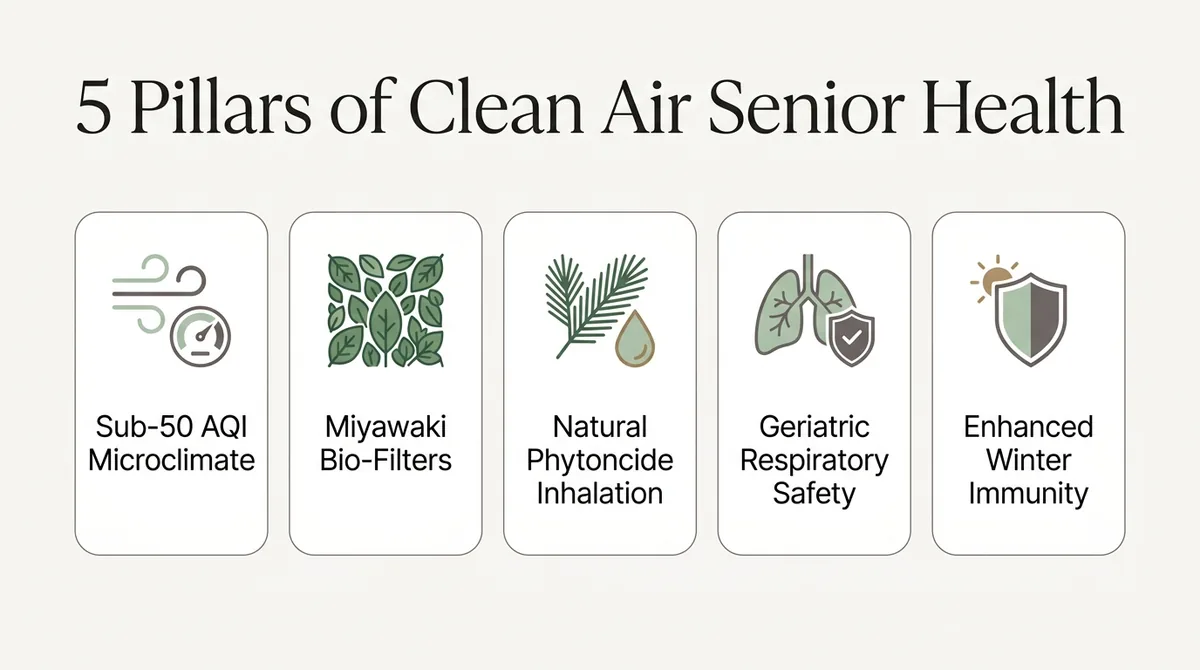
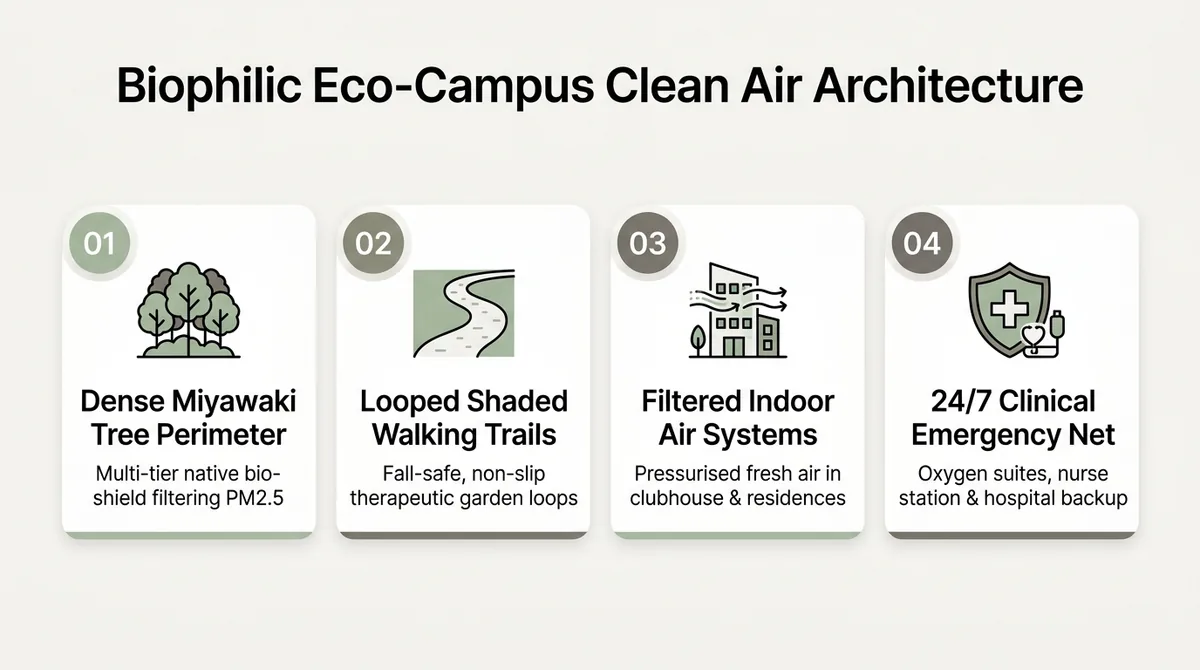
Dense Miyawaki botanical forests act as living bio-filters, absorbing airborne dust, lowering ambient temperatures and releasing beneficial antimicrobial phytoncides. Seniors living within biophilic eco-campuses enjoy an oxygen-rich sub-50 AQI microclimate that naturally strengthens respiratory immunity and calms the nervous system.
Modern eco-friendly senior living communities employ biological engineering through biophilic design and lung health in elderly residents. At the center of this green engineering is the Miyawaki forest methodology, an afforestation technique developed by Japanese botanist Dr. Akira Miyawaki. By planting up to thirty native species per square meter in multi-layered tiers, these micro-forests grow ten times faster and produce thirty times denser foliage than conventional parks.
The clinical returns of Miyawaki forest green campus benefits for seniors are substantial:
- Massive Particulate Interception: Native trees with textured foliage like Peepal (Ficus religiosa), Neem (Azadirachta indica) and Arjun (Terminalia arjuna) act as electrostatic traps, capturing airborne PM10 and PM2.5 particles on leaf surfaces.
- Continuous Oxygen Generation: Mature Peepal and Banyan trees utilize Crassulacean Acid Metabolism adaptations for nocturnal carbon uptake, establishing an oxygen rich green campus for retirees.
- Therapeutic Plant Phytoncides: Forest canopies emit natural antimicrobial phytoncides that stimulate human Natural Killer (NK) immune cell activity and lower serum cortisol during daily walks.
- Microclimate Buffering: Dense foliage moderates ambient temperatures and breaks harsh winter winds, providing a tranquil outdoor haven.
| Metric | Typical Metro Apartment | Biophilic Eco-Campus | Health Impact |
|---|---|---|---|
| Average Winter AQI | 250 – 450+ (Severe) | Sub-50 to 75 (Good) | Eliminates bronchial spasms and COPD flares. |
| Daily PM2.5 Dust | 120 – 250 µg/m³ | Under 30 µg/m³ (WHO Aligned) | Prevents particulate translocation into bloodstream. |
| Airborne Phytoncides | Virtually absent | Abundant along botanical trails | Stimulates immune defenses and elevates mood. |
| Outdoor Mobility | Unsafe; restricted | Unrestricted walks and yoga | Preserves leg muscle strength and joint mobility. |
| Emergency Medical Net | 45 – 90 mins in traffic | Under 10 mins with ICU ambulance | Ensures rapid oxygen therapy during crises. |
Choosing an environmentally conscious living environment is a fundamental health decision for older adults. When evaluating homes, adult children should assess how the master plan integrates natural ecology and elder-friendly infrastructure, as outlined in our practical guide on choosing the right apartment for elderly parents in India.
Looking for a Clean Air Retirement Sanctuary in Central India?
URJA by CHL offers 100% freehold residences set amidst dense Miyawaki botanical reserves, sub-50 AQI microclimates and 24/7 on-campus clinical respiratory care backed by CHL Hospitals Indore.
Discover URJA by CHLWinter Respiratory Care in Senior Communities: Clinical Protocols and Daily Living
Proactive winter respiratory care pairs daily preventative health tracking with hospital-backed clinical readiness. Structured senior communities integrate daily vitals screening, heated indoor hydrotherapy, nutritionist-planned seasonal meals and on-site emergency oxygen infrastructure to stop seasonal bronchial flare-ups before they become emergencies.
While clean botanical air provides the first line of defense, seniors living with pre-existing conditions like chronic bronchitis, asthma or cardiac vulnerabilities require proactive medical oversight. Premier active senior living communities implement structured clinical frameworks for winter respiratory care in senior communities that prevent seasonal sniffles from escalating into secondary infections:
- Baseline Pulmonary Profiling and Vitals Tracking: Upon moving in, residents receive baseline spirometry reviews supervised by CHL pulmonologists. Dedicated on-campus nursing stations conduct daily morning screenings of pulse oximetry (SpO2) and peak flow to catch subtle respiratory dips early. Explore our clinical facilities on our healthcare amenities page.
- Specialized Respiratory Therapy Suites: On-site wellness rooms feature hospital-grade nebulizers and humidifiers where residents prone to mucosal plugging receive guided breathing exercises and airway clearance therapy from physiotherapists.
- Dietary Defense and Immunity Nutrition: Dietitians curate antioxidant-rich seasonal menus featuring warm herbal decoctions (*kadhas* with tulsi, ginger and black pepper) and amla extracts rich in natural vitamin C. Read our guide on how senior living manages diabetic and senior nutrition in India.
- Heated Indoor Pool Hydrotherapy: To avoid cold-air bronchospasms, communities offer 32°C heated indoor hydrotherapy pools. Warm humid air soothes bronchial passages while water buoyancy eliminates joint pressure, allowing safe conditioning. Explore our guide on heated pool hydrotherapy for senior arthritis and mobility.
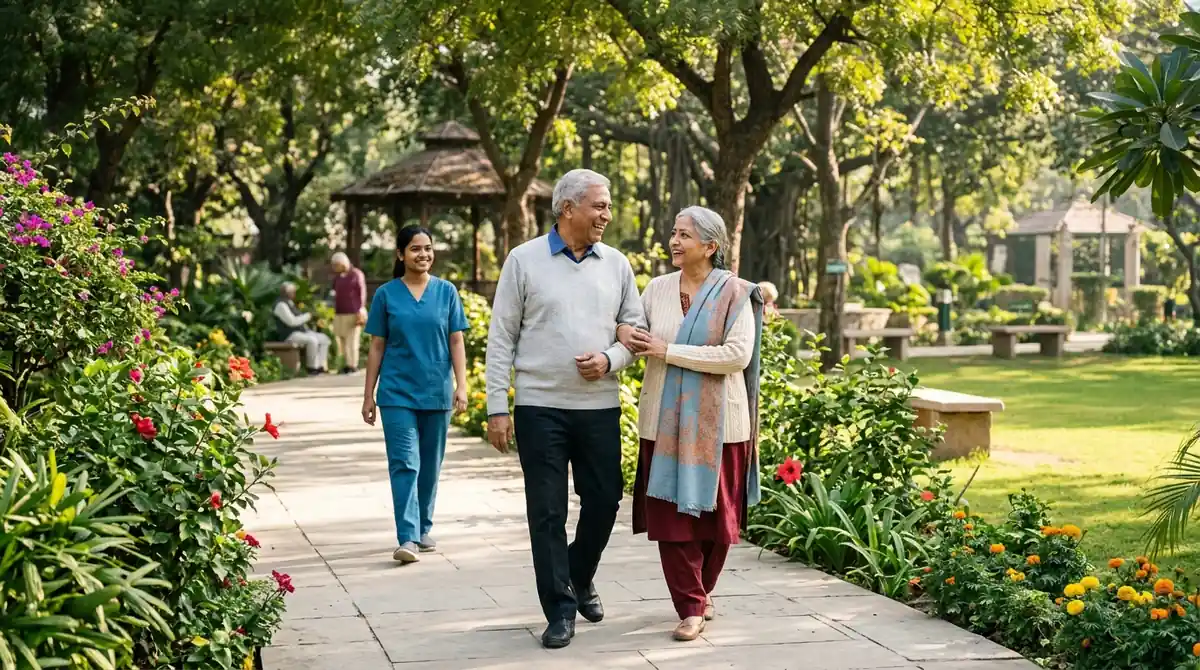
- Fall-Safe Shaded Walking Trails: Communities design outdoor walking trails for retired couples nestled within micro-forest zones, featuring non-skid surfaces, continuous handrails and resting pavilions for comfortable exercise.
- Immediate Emergency Clinical Net: On-campus medical stations maintain emergency oxygen concentrators, BIPAP support and dedicated critical care transport capable of reaching a tertiary ICU in under ten minutes.
This integrated approach yields measurable clean air benefits for senior immunity, reducing winter infections and inhaler dependency while replacing isolation with active peer camaraderie.
Why Indore Offers the Ideal Clean Air Sanctuary for Active Senior Living
Ranked India's cleanest city seven consecutive times, Indore provides clean urban governance, favorable geographic elevation and moderate winter climates. Along the green Indore Bypass, master-planned senior developments deliver low AQI living without sacrificing rapid connectivity to tertiary healthcare centres and Devi Ahilyabai Holkar Airport.
Geographic location plays a fundamental role when escaping northern winter smog. Unlike the low-lying Indo-Gangetic plains where stagnant cold air traps pollution for weeks, Indore sits on the Malwa plateau at an elevation of 553 meters above sea level. This topography benefits from natural atmospheric circulation, abundant sunshine and moderate winter temperatures, avoiding both bone-dry desert air and humid coastal dampness.
Indore's position as the cleanest city in India for active retirement living is reinforced by seven consecutive Swachh Survekshan national awards. Strict municipal waste segregation, mechanized dust-free street sweeping and zero open biomass burning keep baseline urban pollution remarkably low. Discover why retirees across India are choosing this city in our guide to why Indore is the best city to retire in India.
Along the Indore Bypass, master-planned developments provide Indore Bypass eco friendly retirement apartments set amidst agricultural green belts away from congested city traffic. This corridor maintains smooth eight-lane connectivity to super-specialty hospitals and Devi Ahilyabai Holkar Airport, making family visits effortless for non-resident Indian (NRI) children.
By pairing civic cleanliness with on-campus Miyawaki afforestation, URJA by CHL creates a genuine low AQI senior living community Indore where seniors enjoy morning outdoor freedom among an engaging peer community of retired professionals.
How to Evaluate a Clean Air Retirement Community: A 5-Step Practical Checklist
Evaluating a clean air retirement community requires verifying real-time microclimate AQI data, examining biological tree canopy density, inspecting indoor air filtration, testing on-site clinical emergency preparedness and ensuring transparent 100% freehold RERA legal ownership.
Families evaluating senior living communities should follow this five-step checklist during on-site visits:
- Verify On-Site Microclimate Air Quality Data: Request historical winter AQI logs measured inside the campus rather than relying on distant municipal monitors. Confirm that outdoor grounds consistently maintain sub-75 AQI readings throughout November, December and January.
- Inspect Botanical Density and Miyawaki Forest Integration: Walk perimeter green buffers personally. Ensure the developer has planted dense native species like neem, peepal and arjun that provide genuine bio-filtration rather than purely ornamental palm trees.
- Examine Indoor Air Quality and Senior-Friendly Architecture: Check whether communal lounges and residences feature continuous fresh air ventilation systems. Verify essential barrier-free features including zero-threshold doorways and non-skid flooring, as detailed in our guide on essential senior-friendly features every retirement home must have.
- Audit Clinical Respiratory Equipment and Hospital Integration: Confirm that registered nurses are on duty twenty-four hours a day with oxygen concentrators, nebulizers and emergency protocols guaranteeing tertiary ICU transfer within ten minutes.
- Verify 100% Freehold RERA Title Ownership vs Leasehold Contracts: Insist on registered freehold sale deeds under state Real Estate Regulatory Authority (RERA) rules rather than restrictive leasehold deposits, as explained in our guide on the real cost of retirement homes in India.
Following this practical framework ensures that families choose a dignified, clinically safe environment where parents breathe pure air and thrive in active community life.
FAQs
How do clean air retirement communities in India protect seniors from winter smog and respiratory illness?
Clean air retirement communities protect seniors through dense Miyawaki botanical micro-forests that trap PM2.5 particulates, low-density campus layouts sustaining sub-50 AQI microclimates, filtered indoor wellness zones and 24/7 on-campus geriatric nursing with emergency oxygen equipment to manage respiratory health proactively.
Why does winter air pollution affect senior citizens more severely than younger adults?
Aging reduces alveolar surface area, diminishes mucociliary clearance and weakens chest wall elasticity. Inhaling winter PM2.5 and PM0.1 particles triggers deep alveolar inflammation that enters the bloodstream, elevating risks of acute asthma, COPD flare-ups, stroke and cardiac events in elderly individuals.
What is a Miyawaki micro-forest and how does it clean the air in a senior community?
A Miyawaki micro-forest is a Japanese method of planting dense multi-tiered native trees that grow ten times faster than conventional parks. The layered foliage of peepal, neem and arjun captures airborne dust, lowers ambient heat and emits antimicrobial phytoncides that naturally strengthen senior immunity.
Can seniors with chronic COPD or bronchial asthma stay active during winter in an eco-friendly community?
Yes. In clean air eco-campuses, seniors with COPD or asthma stay active by using sheltered botanical walking loops during sunny hours, exercising in 32°C heated hydrotherapy pools and participating in indoor yoga while under daily vital monitoring by trained geriatric care nurses.
How does URJA by CHL on the Indore Bypass deliver clean air and specialized geriatric care?
URJA by CHL pairs a low-density campus with thousands of native Miyawaki trees along the green Indore Bypass, maintaining verified sub-50 AQI microclimates. Residents benefit from 24/7 on-campus nursing, doctor consultations, emergency oxygen suites and direct hospital backup from CHL Hospitals Indore minutes away.
Experience Clean Air Senior Living at URJA by CHL Indore
Protect your parents from harsh winter smog. Schedule a private guided campus tour, walk through our lush Miyawaki forest trails and discover 100% freehold senior residences backed by 25+ years of healthcare excellence from CHL Hospitals.