
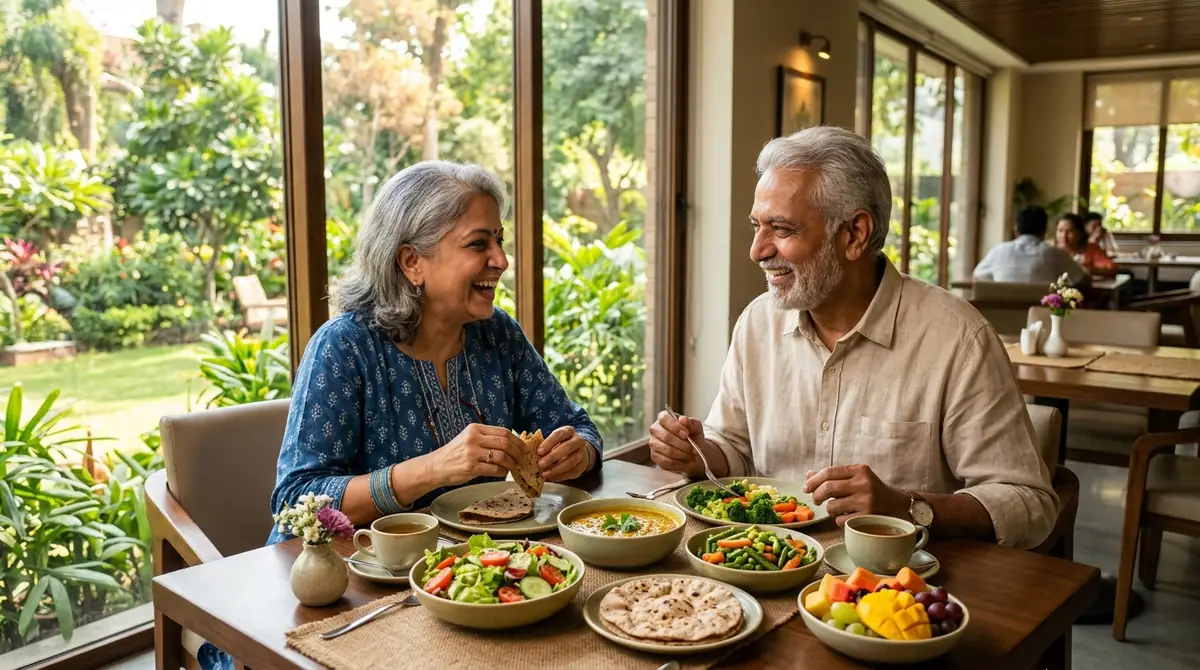
Managing chronic health conditions like Type 2 diabetes, hypertension and acid reflux becomes an everyday challenge as we grow older. In most Indian households, preparing separate meals with minimal oil, low sodium and low glycemic index grains while the rest of the family eats standard food is exhausting for ageing parents. Skipping meals, eating reheated leftovers or relying on untrained domestic cooks often leads to erratic blood sugar spikes, morning fatigue and unexpected hospital visits. Proper daily nourishment should never feel like a chore or a compromise.
This is why doctors, geriatric dietitians and families are looking closely at how active senior living communities manage diabetic and senior nutrition India. Through nutritionist-curated dining programmes, structured 5-meal daily schedules, fresh local ingredients and personalised diabetic care, purpose-built retirement communities take the daily burden of meal planning off seniors' shoulders. Instead of worrying about grocery runs and kitchen oil levels, residents enjoy wholesome, delicious, home-style food that keeps their vitals steady, their energy high and their digestion smooth.
The Daily Struggle of Managing Senior Diabetic Diets at Home in India
Managing diabetic and low-sodium diets in traditional Indian households is difficult due to family food preferences, reliance on high-glycemic white rice and refined wheat, inconsistent meal timings and domestic cooks who struggle to measure oil, salt and portion sizes accurately.
Over 30% of urban Indian seniors live with Type 2 diabetes, often accompanied by high blood pressure or chronic kidney strain. Yet, Indian domestic kitchens are traditionally built around carb-heavy staples: polished white rice, refined maida rotis, fried evening snacks and deep-fried festive sweets. When older parents need a specialised diet, preparing two or three separate dishes for every meal creates constant friction and kitchen fatigue.
Many seniors living alone or with busy working children fall into unhealthy eating habits:
- Irregular Meal Timings: Seniors often delay breakfast or eat late dinners, triggering hypoglycemic dips (sudden blood sugar drops) followed by steep post-meal sugar spikes.
- Inconsistent Portion and Oil Control: Local domestic cooks often use generous amounts of refined seed oils, excess salt and heavy gravies, making it difficult to maintain heart and kidney health.
- Hidden Sugars and High-GI Starches: Everyday foods like white bread, suji, poha without vegetables and sweet morning chai cause sudden blood glucose spikes without providing lasting satiety.
- Nutritional Deficiencies: Monotonous home meals often lack adequate lean protein, vitamin B12, vitamin D3 and dietary fibre, accelerating age-related muscle loss (sarcopenia) and joint weakness.
When seniors move into an apartment for elderly parents in India, having a dedicated dining ecosystem eliminates these daily nutritional risks.
How Professional Senior Living Communities Structure Geriatric Nutrition
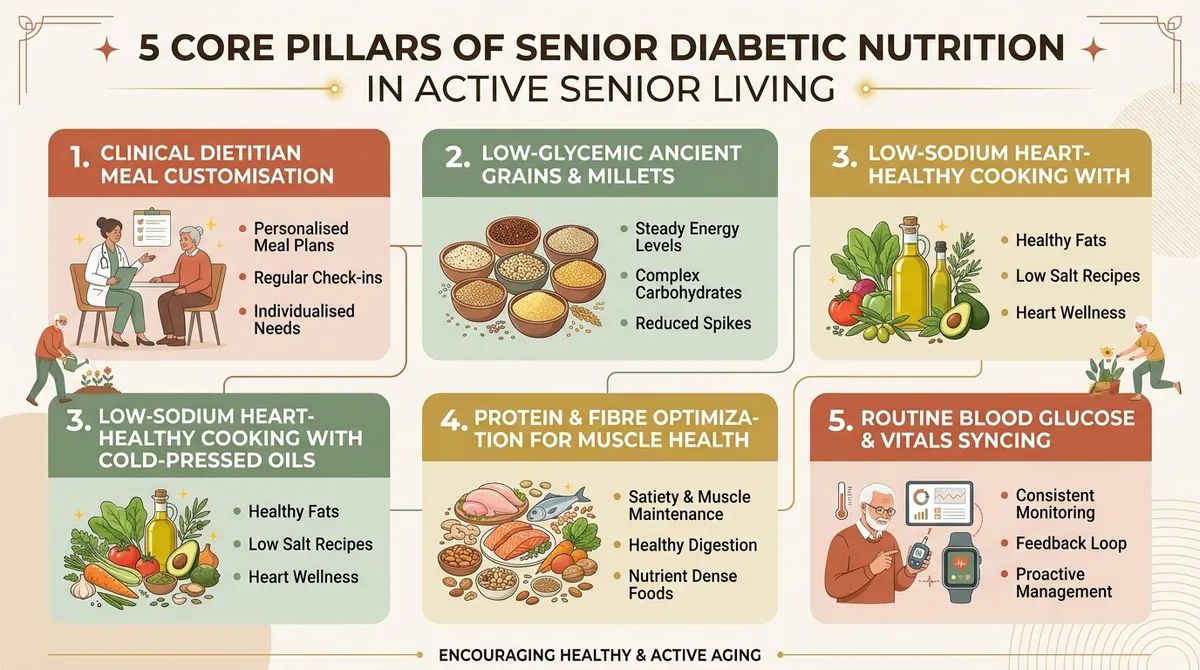
Professional senior living communities employ on-campus clinical dietitians who assess each resident's medical reports, HbA1c history, allergies and digestive capacity to formulate individualised meal charts. Kitchens use commercial-grade hygiene protocols and fresh batch cooking to serve balanced nutrition.
Unlike standard hostels or boarding houses with rigid one-size-fits-all menus, active senior communities treat food as preventative medicine. The culinary and wellness teams work hand-in-hand to ensure that every dish meets clinical dietary guidelines while retaining the authentic taste and warmth of traditional Indian cuisine.
The dietary management process follows five structured pillars:
- Comprehensive Intake Assessment: Upon moving in, the resident's complete medical history, including recent fasting blood glucose, HbA1c levels, lipid profiles, kidney function tests and known food allergies, is recorded in the community health database.
- Individualised Diet Protocols: The dietitian categorises residents based on therapeutic dietary needs: Diabetic (low-GI, high-fibre), Cardiac (low-sodium, zero trans-fat), Renal-friendly (controlled potassium and protein), or Pure Jain/Satvik.
- Smart Kitchen Token Management: Kitchen chefs receive clear digital dietary tokens for every table or delivery order. If a resident requires salt-free dal or gluten-free bajra rotis, the kitchen prepares their specific portions separately without cross-contamination.
- Fresh Daily Sourcing and Batch Cooking: Meals are cooked fresh in small batches using whole, unpolished grains, seasonal vegetables, cold-pressed oils and fresh herbs, avoiding pre-packaged gravies or artificial preservatives.
- Periodic Diet Review: Dietitians review resident vitals monthly alongside the on-site medical care in senior living homes team, adjusting caloric intake and portion sizes as health conditions improve.
Looking for Nutritionist-Curated Senior Living in Central India?
At URJA by CHL on Indore Bypass, our Uma Club dining programme offers dietitian-planned 5-meal daily menus tailored for diabetic and cardiac wellness, backed by CHL Hospitals' 25-year medical legacy.
Explore URJA By CHL LifestyleLow-Glycemic Index Foods and Ancient Grains in Senior Diabetic Meal Plans
Senior living meal plans replace refined carbohydrates with low-glycemic ancient grains such as jowar, ragi, bajra, foxtail millet and steel-cut oats. These complex carbohydrates release glucose slowly into the bloodstream, preventing sugar spikes and keeping seniors energised throughout the day.
The foundation of senior diabetic management lies in selecting carbohydrates with a low Glycemic Index (GI). High-GI foods (GI above 70) break down rapidly in the stomach, flooding the bloodstream with glucose and forcing the pancreas to work overtime. In contrast, low-GI foods (GI below 55) digest slowly, providing steady, sustained energy.
In modern senior citizen gated communities in Indore, dining menus thoughtfully integrate traditional Indian superfoods:
- Millets and Ancient Grains: Rotis and dosas are prepared using stone-ground jowar (sorghum), ragi (finger millet), bajra (pearl millet) and kodo millet. These grains are rich in dietary fibre, magnesium and polyphenols that improve cellular insulin sensitivity.
- Legumes and Sprouted Pulses: Meals incorporate diverse whole dals such as green moong, kulthi (horse gram), black chana and lobia, offering high plant-based protein without elevating blood urea levels.
- Fibre-Rich Seasonal Vegetables: Chefs prepare generous portions of bitter gourd (karela), bottle gourd (lauki), ridge gourd (turai), fenugreek leaves (methi), spinach and okra (bhindi), which slow down carbohydrate absorption.
- Low-Sugar Fruit Options: Fresh morning fruit servings focus on low-glycemic fruits like green apples, papaya, guava, jamun and pomegranate, avoiding high-sugar fruits like mangoes, chikoos and grapes for diabetic seniors.
The 5-Meal Daily Nutrition Timetable for Active Seniors
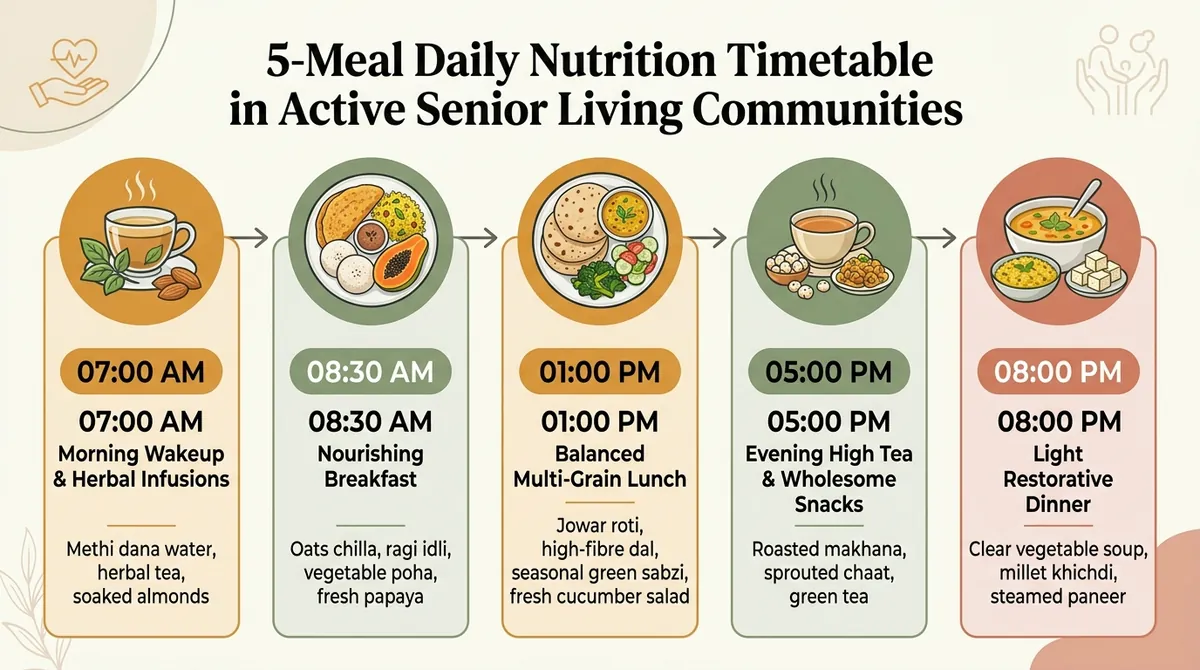
Active senior communities follow a structured 5-meal daily schedule spaced 3 to 4 hours apart: morning herbal infusions at 7:00 AM, wholesome breakfast at 8:30 AM, balanced multi-grain lunch at 1:00 PM, evening high tea at 5:00 PM and a light restorative dinner at 8:00 PM.
Long gaps between meals are particularly dangerous for diabetic seniors, as they trigger sudden hypoglycemia followed by overeating at the next meal. Spacing nutrition into five smaller, nutrient-dense meals throughout the day keeps blood sugar stable, prevents gastric acidity and sustains steady mental focus.
Here is how a typical day of healthy dining is structured in a well-managed active ageing community in India:
| Meal Time | Meal Phase | Diabetic & Senior Menu Options | Nutritional Objective |
|---|---|---|---|
| 07:00 AM | Morning Wakeup & Infusions | Methi dana water, cinnamon tea, green tea, 4-5 soaked almonds, 1 walnut | Activates metabolism, stimulates insulin production and aids joint lubrication. |
| 08:30 AM | Nourishing Breakfast | Steamed ragi idli with sambar, oats vegetable chilla, broken wheat upma, fresh papaya | Delivers complex carbs and protein without sudden sugar spikes. |
| 01:00 PM | Balanced Multi-Grain Lunch | 2 Jowar/multigrain rotis, bowl of yellow dal tadka, seasonal green sabzi, cucumber salad, fresh curd | Complete meal providing fibre, micronutrients and gut-friendly probiotics. |
| 05:00 PM | Evening High Tea & Snacks | Roasted makhana, sprouted moong chaat, roasted chana, ginger lemon herbal infusion | Prevents evening energy slumps without deep-fried samosas or sugary biscuits. |
| 08:00 PM | Light Restorative Dinner | Clear vegetable soup, foxtail millet khichdi, grilled low-fat paneer/tofu with sautéed beans | Easy to digest, prevents nocturnal acid reflux and promotes sound, restful sleep. |
By aligning meal timings with the daily routine in senior living homes, residents never experience hunger pangs or sudden fatigue.
Managing Heart Health, Hypertension and Low-Sodium Dietary Needs
Kitchens in senior living communities manage hypertension and cardiac health by using cold-pressed oils in controlled quantities, substituting excess salt with digestive herbs like jeera, ajwain and rock salt and maintaining zero trans-fats across all culinary preparations.
Diabetes and hypertension frequently occur together in seniors. Excess dietary sodium leads to fluid retention, stiffens arterial walls and increases cardiovascular workload. In typical home cooking, salt and oil are added by eye, often exceeding the World Health Organization's recommended daily limit of 5 grams of salt per person.
In professionally managed senior communities, culinary teams use scientific techniques to ensure food remains flavourful while protecting cardiovascular health:
- Measured Healthy Fats: Kitchens cook exclusively with heart-healthy, cold-pressed oils like mustard, groundnut and sesame oils, or small amounts of pure A2 cow ghee. Cooking oil is measured per portion rather than poured freely.
- Herb-Based Flavouring: Instead of relying on salt for taste, chefs use aromatic digestive herbs and spices like freshly grated ginger, turmeric, roasted cumin seeds (jeera), carom seeds (ajwain), fresh coriander and lemon juice.
- Natural Electrolyte Balance: Diets are naturally rich in potassium and magnesium from green leafy vegetables, coconut water and seeds, which help counter the effects of sodium and relax blood vessel walls.
- Zero Deep-Fried Foods: Evening snacks and sides are baked, dry-roasted or air-cooked rather than deep-fried, preventing harmful trans-fats and reducing arterial plaque formation.
Combining heart-healthy food with regular walks through green retirement communities with clean air significantly improves long-term cardiovascular resilience.
Home Kitchen Cooking vs. Managed Senior Living Dining in India
Compared to unmonitored home kitchens, managed senior living dining provides clinical nutrition tracking, consistent low-GI recipes, zero cooking hassles, 100% fresh hygiene standards and joyful social dining that boosts mental and physical vitality.
Evaluating dining options is one of the most critical steps when researching the cost of retirement homes in India. Here is a detailed comparison of daily nutritional care:
| Dining Parameter | Traditional Home Kitchen Setup | Managed Senior Living Community Dining |
|---|---|---|
| Nutritional Planning | Ad-hoc daily decisions by family or untrained maid | Formulated by qualified clinical geriatric dietitians |
| Diabetic Customisation | Single household meal; difficult to prepare separate dishes | Individualised low-GI, salt-free or gluten-free portions |
| Meal Timing & Regularity | Frequently delayed due to family schedules | Strictly punctual 5-meal schedule spaced every 3–4 hours |
| Cooking Oil & Salt Control | Unmeasured pouring; high reliance on refined oils | Measured cold-pressed oils and controlled sodium recipes |
| Daily Effort & Stress | Daily grocery shopping, vegetable cutting and kitchen cleaning | Zero domestic chores; fresh hot meals served ready to eat |
| Emergency Medical Sync | Family handles sudden sugar drops or spikes alone | On-site nurses and medical staff immediately available |
| Social Environment | Often eating alone while watching television | Vibrant dining café with friendly peer conversations |
Experience Healthy Community Dining at URJA by CHL
Schedule a personalized campus visit to tour our Uma Club dining facilities, taste our dietitian-curated senior menu and meet our healthcare team.
Schedule a Campus VisitSocial Dining, Community Cafés and In-Home Meal Flexibility
Senior living communities offer flexible dining formats: residents can enjoy lively shared meals in the clubhouse café to combat loneliness, request private in-home tray delivery during illness or cook personal favourites in their own modular kitchenettes.
Nutrition is not just about calories and nutrients; it is also an emotional and social experience. Geriatric studies consistently show that seniors who eat alone consume fewer calories and have higher rates of depression and weight loss. In contrast, eating in a warm community dining room fosters laughter, meaningful conversations and a genuine appetite. For families evaluating why NRIs choose managed senior living for parents, knowing that parents enjoy joyful, nutritious meals every day brings great peace of mind.
Modern independent living retirement communities in Indore offer complete lifestyle flexibility:
- Vibrant Club Dining: Residents gather at the central clubhouse dining hall (such as the Uma Club at URJA by CHL) for lunch and dinner, catching up with neighbours, discussing books or celebrating birthdays over nutritious meals.
- In-Home Meal Tray Delivery: On days when a resident feels tired, has a mild fever or prefers quiet privacy, freshly packed, insulated meal trays are delivered directly to their doorstep at no extra hassle.
- Private Apartment Kitchenettes: Every apartment and villa comes equipped with an age-friendly modular kitchen with piped gas or induction stoves, allowing residents to brew their favourite morning coffee or make personal tea snacks whenever they wish.
- Guest & Festive Dining: When children, grandchildren or relatives visit, communities offer special guest dining arrangements and festive feast menus with healthy diabetic-friendly dessert alternatives.
5-Step Checklist: How to Evaluate Dining Services in a Senior Living Community
When touring senior living communities, verify on-site clinical dietitian support, inspect kitchen hygiene and oil storage, review sample 7-day diabetic menus, test meal customisation flexibility and check in-home tray delivery options during illness.
Before booking an independent villa or apartment in any senior community, or deciding when to move to a retirement community in India, use this 5-step evaluation checklist:
- Verify Qualified Dietitian Supervision: Ask if the community employs full-time qualified nutritionists who formulate menus and consult with residents individually, or if cooking is left entirely to outside caterers.
- Review a 7-Day Diabetic Menu: Check whether breakfast, lunch and dinner options consistently feature low-GI ancient grains, fresh salads and lean proteins rather than repetitive refined carbs.
- Inspect Kitchen Hygiene and Ingredient Sourcing: Tour the central kitchen facility to ensure stainless steel preparation surfaces, separate vegetarian preparation zones, cold-pressed oil storage and commercial dish sanitisation.
- Test Dietary Customisation Protocols: Inquire how the kitchen handles specific medical needs like salt-free diets, pureed textures for chewing difficulties, or onion-garlic-free Jain meals.
- Confirm Medical Coordination: Ensure that daily dietary records connect directly with the on-site emergency clinic and nursing station for proactive blood glucose tracking.
Following these steps ensures that you select a community offering reliable, hospital-grade care alongside RERA-approved legal protections and transparent governance from trusted developers in senior housing.
FAQ's
How do active senior living communities in India customize daily meal plans for diabetic, low-sodium, and heart health needs?
Active senior living communities customize daily meal plans through on-campus clinical dietitians who record each resident's medical records, fasting blood sugar, HbA1c and blood pressure. Kitchens prepare individualised low-glycemic, low-sodium and heart-healthy portions using ancient grains (jowar, ragi, bajra), cold-pressed oils and fresh herbs, served on a punctual 5-meal daily schedule.
Can diabetic seniors request customized in-home meal delivery if they feel unwell?
Yes, well-managed senior communities offer full in-home meal tray delivery. If a resident is recovering from surgery, feeling under the weather or simply wants private dining, healthy diabetic meals packed in thermal insulated containers are delivered directly to their apartment or villa doorstep.
Are traditional festive sweets and special treats available for diabetic seniors?
Yes, community pastry chefs and dietitians prepare healthy festive treats using natural, diabetic-safe sweeteners like stevia, dates and fig purees, paired with roasted nuts and seeds. This allows seniors to participate fully in Diwali, Holi and birthday celebrations without blood sugar spikes.
How do senior living kitchens accommodate chewing difficulties or swallowing issues?
For seniors with dental bridges, dentures, or dysphagia (swallowing difficulties), kitchens prepare soft-cooked, minced or pureed variations of standard meals, such as smooth vegetable soups, soft dal khichdi, steamed paneer and mashed fruits, ensuring complete nutrition without choking risks.
What is the average monthly cost of dining and meal plans in Indian senior living communities?
Comprehensive dining programmes in premium senior living communities in India typically range between ₹7,000 and ₹12,000 per person per month. This covers a complete 5-meal daily plan (morning tea, breakfast, lunch, high tea, dinner) prepared with organic ingredients, dietitian supervision and flexible community dining options.
Give Your Parents the Gift of Healthy, Stress-Free Nutrition
Discover how URJA by CHL combines 24/7 medical safety, lush 15-acre green living and nutritionist-curated dining in Indore.
Contact CHL Urja Today