I hear this exact concern from almost every family evaluating senior living options. The primary trigger for moving is rarely just lifestyle or a desire for a bigger clubhouse. It is usually a health scare. A sudden drop in blood pressure, a slip in the bathroom or an unexpected bout of breathlessness makes everyone realise that distance and time are the most important factors in an emergency.
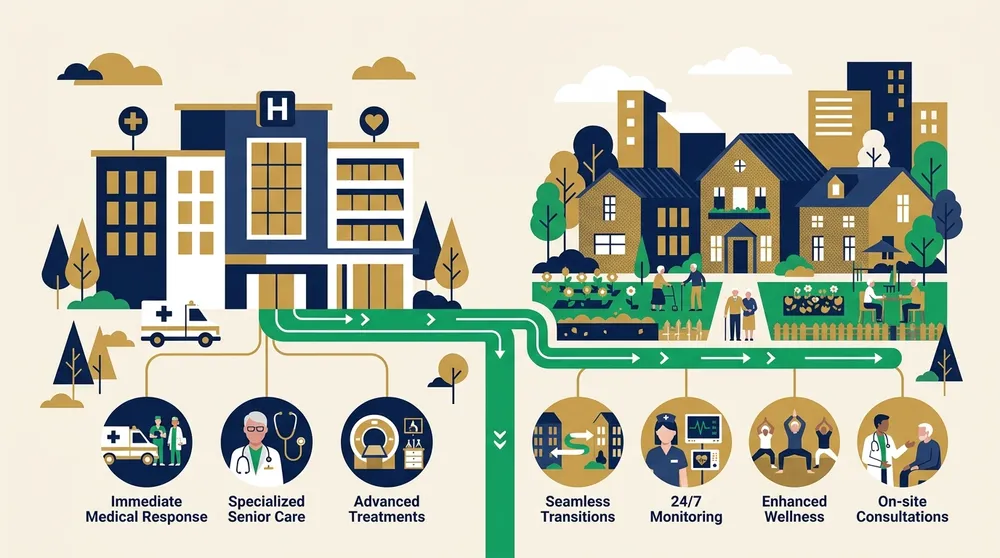
Today's premium retirement communities are built around the concept of immediate medical response. They do not just call an ambulance and wait. They start treatment while the ambulance is on its way, making expert help available at all times right within the senior living community. If you are evaluating whether it is the right time to make this move, read our guide on when to move to a retirement community in India.
How Do Senior Living Communities in India Respond to a Medical Emergency?
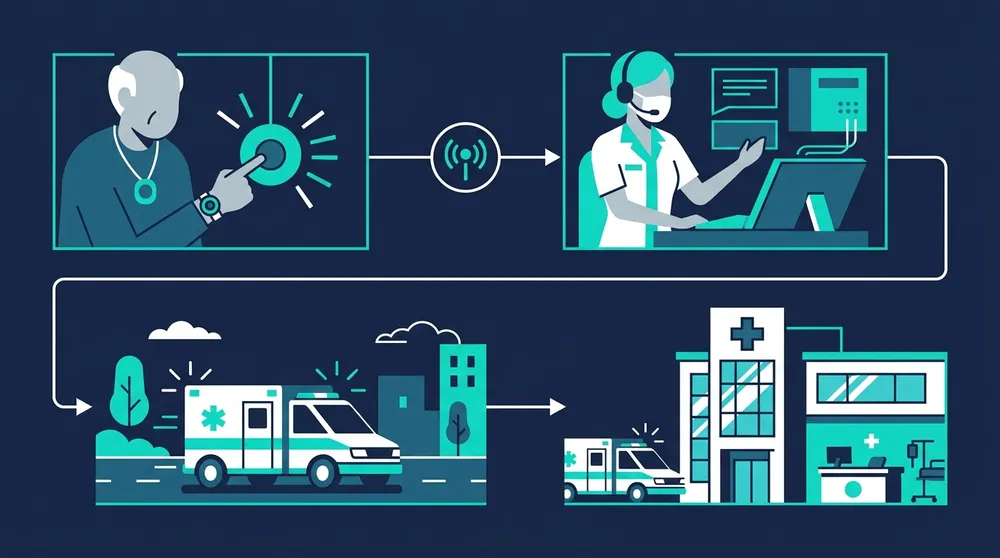
Active senior living communities in India install emergency pull cords in bathrooms and bedrooms, provide wearable panic buttons and maintain 24/7 security desks. This makes sure a trained responder reaches a resident's apartment within minutes of an alert being triggered.
When an emergency strikes at a regular city apartment, the resident has to find their phone, unlock it, call a relative or hospital and then try to explain the situation. If they are in severe pain, disoriented or unable to speak clearly, this becomes nearly impossible. Valuable minutes are lost just trying to communicate the problem.
Retirement communities remove this delay entirely. The architecture itself acts as a safety net. Bathrooms, where a majority of falls happen, are fitted with emergency pull cords that hang low enough to reach from the floor. Pressing a bedside button or pulling a cord instantly alerts the central nursing station and the main security gate at the same time.
Staff members know exactly who needs help and where they are located. They arrive at the apartment with a wheelchair or stretcher, basic first aid equipment and the resident's complete medical history in hand. There is no guessing; the response is immediate and well-informed.
What Medical Staff and Facilities Are Available On-Site at Retirement Homes?
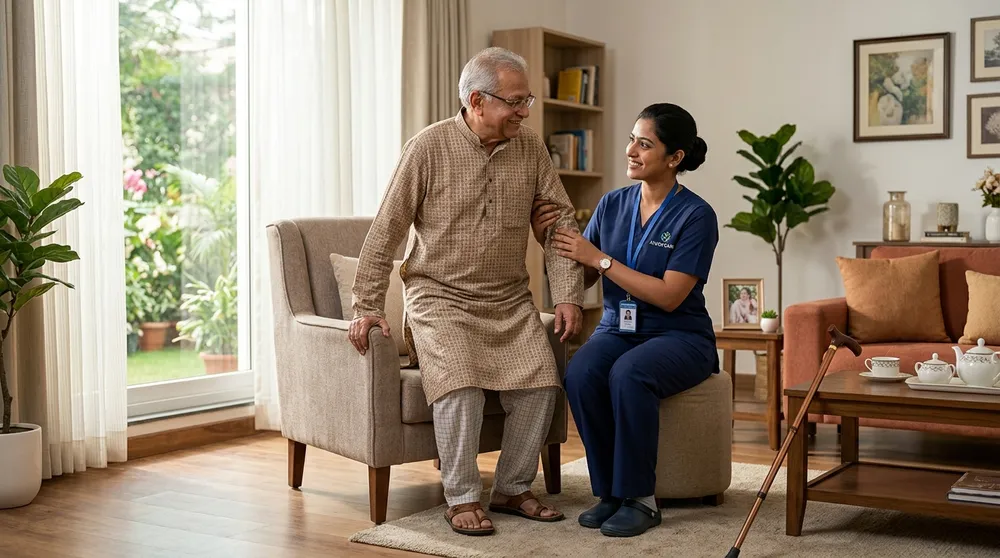
Premium retirement homes maintain an on-site health centre staffed by qualified nurses 24 hours a day. A visiting physician or a resident doctor handles daily consultations, while emergency medical technicians manage sudden health crises.
Having a doctor on call in the city is good, but having a trained nurse just down the hall is far better. You do not have to wonder if a symptom is serious enough to warrant a tiring hospital visit. You just walk down to the on-site clinic or call the nurse to your room for an assessment.
This setup is especially useful for managing chronic conditions like diabetes or hypertension. The nurses check vitals daily, administer regular medication and keep a close watch on any unusual changes in a resident's health. By catching symptoms early, they often stop a minor issue from turning into a full emergency. If you want to understand the different care models available for varying health needs, you can explore the types of old age homes in India.
The on-site clinics are generally equipped to handle minor injuries, oxygen administration, nebulisation and basic ECGs. This means a resident feeling breathless at 2:00 AM can receive oxygen support within five minutes rather than waiting for an ambulance to cross town.
Worried About Medical Support for Your Parents?
CHL Urja provides 24/7 nursing support and is directly backed by the medical expertise of CHL Hospitals. Do not leave your parents' health to chance. Contact us today to learn more about our medical infrastructure.
Chat with a Healthcare ExpertDo Retirement Communities in India Have Hospital Tie-Ups and Dedicated Ambulances?
Retirement communities establish formal partnerships with nearby multi-speciality hospitals. They keep an ambulance stationed on campus or nearby, enabling priority admission and immediate treatment without any administrative delays.
Traffic is a harsh reality in every major Indian city. Waiting for a hospital ambulance to navigate through evening rush hour can waste the golden hour, which is the window of time that matters most for treating stroke or heart attack patients.
To address this logistical problem, managed senior living communities keep an ambulance ready on the premises. The real advantage, though, is the hospital tie-up. Because the community management has a direct line to the partner hospital, the emergency room team is already briefed about the patient's condition and medical history before the ambulance arrives.
There is no waiting at the hospital reception desk to fill out lengthy admission forms or arrange deposits while the patient suffers in the hallway. The hospital treats residents from partner communities as priority cases. This smooth handover saves lives and removes the full administrative burden from the family during an already stressful time.
Home Care vs Retirement Community Care: Which Is Safer During a Medical Crisis?
Managing a medical crisis at home requires family members to handle logistics, transport and hospital admission all at once. Community care shifts this entire responsibility to trained professionals, allowing families to focus solely on the patient.
Let's look at a practical, real-world comparison. If a senior resident experiences sudden, severe chest pain, the medical response differs dramatically based on where they live.
| Action Required | Living Independently at Home | Living in a Retirement Community |
|---|---|---|
| Initial Alert | Resident must find a phone, unlock it and try to make a coherent call. | Resident simply pulls a cord or presses a wearable panic button. |
| First Response | Wait for family members or neighbours to wake up and arrive (15-30 mins). | On-site nurse arrives at the apartment with first aid equipment (2-5 mins). |
| Transport | Call external ambulance service and wait for it to navigate city traffic. | Use the dedicated on-site ambulance immediately without waiting. |
| Hospital Admission | Family handles paperwork, explains medical history and arranges deposits. | Partner hospital receives patient files digitally; priority admission begins. |
This clear contrast in response times and logistics is exactly why families are increasingly choosing specialised senior healthcare environments. When every second matters, a structured protocol beats an improvised plan every time.
See Our Medical Facilities Firsthand
The best way to understand our emergency readiness is to see it in person. Book a campus tour today to view our 24/7 health centre and meet our nursing staff.
Book a Campus TourHow Does Preventative Healthcare in Senior Living Communities Reduce Medical Emergencies?
Retirement communities focus on preventative healthcare through regular checkups, group fitness classes, tailored nutrition plans and mental health support. Keeping seniors active day to day reduces the risk of severe medical emergencies considerably.
The single best way to deal with a medical emergency is to stop it from happening in the first place. This is where the active part of active senior living in India truly shows its worth.
Living alone often leads to a sedentary lifestyle. Cooking for one person feels like too much effort, which leads to poor eating habits over time. In a senior living community, residents have access to daily yoga sessions, physiotherapy and social walking groups. The dining facilities serve meals designed by nutritionists to manage cholesterol, diabetes and blood pressure without sacrificing taste.
Social isolation is also a well-documented health risk. Research shows that lack of social connection increases the risk of cognitive decline and heart-related problems in older adults. Living in a busy, active community keeps seniors engaged and mentally sharp, which builds natural resilience against illness.
What Are the Medical Protocols for Managing Chronic Conditions in Retirement Homes?
Communities follow specific protocols for managing chronic conditions like diabetes, arthritis and cardiac ailments. Regular monitoring and controlled meals help maintain stability and prevent sudden complications from developing.
Handling emergencies is just one part of the picture. Managing daily health requires consistent, structured care. For diabetic residents, the healthcare staff tracks blood sugar levels regularly and coordinates with the kitchen to make sure all meals meet dietary requirements. If a reading goes too high or too low, the nurse steps in right away.
For residents with a cardiac history, regular ECGs and blood pressure checks are part of the daily routine. The on-site staff holds complete medical records, meaning any visiting specialist has immediate access to the patient's full history. This level of daily tracking is simply not possible when a senior lives alone at home. To understand what comprehensive medical care in senior living homes looks like across different facilities, read our detailed post on medical care and emergency support in senior living homes in India.
How Does Technology Help Retirement Communities Handle Health Emergencies Faster?
Modern senior living communities use electronic health records, wearable health monitors and automated medication reminders. This tech-enabled approach to senior care cuts down human error and makes the overall response faster and more accurate.
Technology has genuinely changed senior living in India. Wearable devices track heart rates and detect falls on their own, sending an instant alert to the nursing station even if the resident is unconscious. Electronic health records make sure every medication, every doctor visit and every known allergy is stored accurately in one place.
When a resident is transferred to a partner hospital, these records are sent securely to the emergency room. The attending doctors already know which medications the patient is on. They do not have to guess. This prevents dangerous drug interactions and makes the treatment plan accurate right from the first minute.
Frequently Asked Questions (FAQs)
How do active senior living communities respond to medical emergencies in India?
They respond using a combination of in-room panic buttons, 24/7 on-site nursing staff and dedicated ambulances. The moment an alert is triggered, a nurse arrives at the apartment to provide first aid and check if a priority hospital transfer is needed.
Are doctors available 24/7 in retirement communities?
Most communities have qualified nurses available around the clock, while doctors hold daily clinics on campus and remain on call for emergencies. For specialised or intensive care, residents are quickly transferred to partner hospitals.
Do I have to pay extra for emergency medical care?
Basic first aid, vitals monitoring and on-site nurse consultations are usually covered in your standard monthly maintenance fee. Hospital transfers, specialised treatments and prolonged nursing care are billed separately based on actual usage.
What happens if a resident needs a sudden hospital transfer?
The on-site ambulance is dispatched right away. The community management contacts the partner hospital and the resident's family together. The hospital prepares for priority admission based on the patient's electronic health records, skipping the usual waiting process.
Conclusion
Choosing a retirement home is ultimately about securing real peace of mind for both the residents and their children. Knowing how do retirement communities handle medical emergencies India removes the anxiety of living alone in a sprawling city. With instant response systems, on-site nurses, preventative care routines and hospital tie-ups, these communities provide a safety net that simply cannot be replicated in a standard city apartment. You get to enjoy an active, socially rich and independent life, fully confident that expert medical help is always just a button press away.
Secure Your Peace of Mind Today
Do not wait for a medical emergency to realise how much a secure environment matters. Explore our healthcare-backed senior living apartments in Indore and take charge of your future.
Contact Us Now