
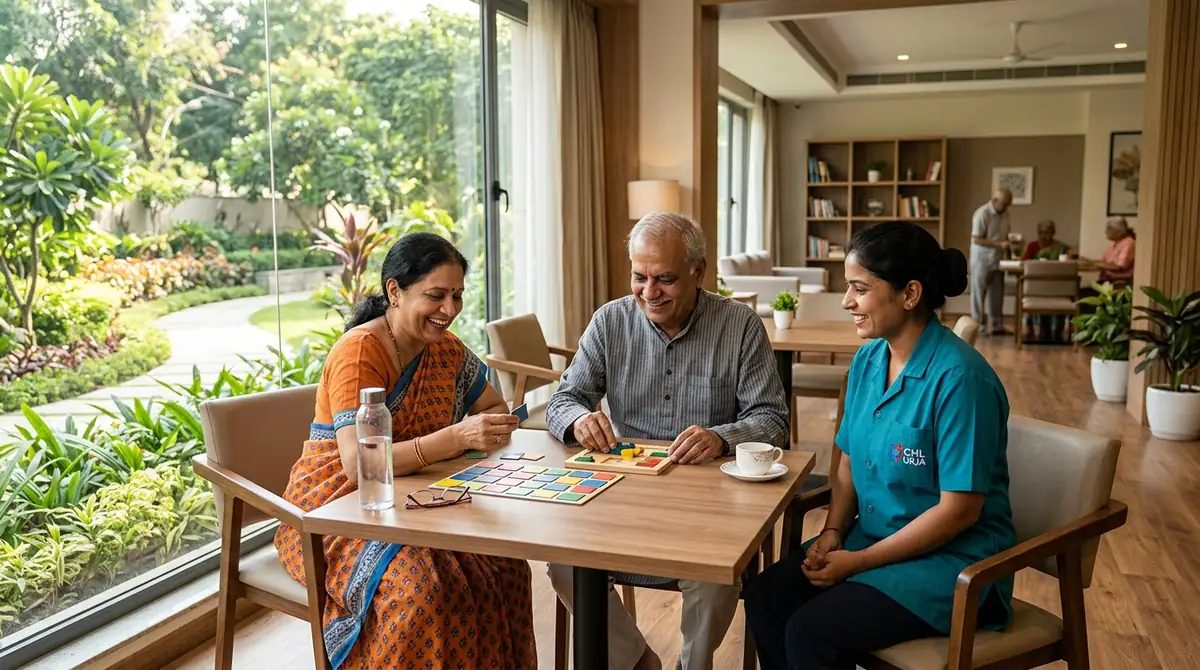
Watching a parent repeatedly misplace house keys, forget familiar routes to the neighbourhood market or pause mid-sentence searching for everyday words is unsettling for any Indian family. In homes across Mumbai, Delhi, Bengaluru and Indore, adult children quietly wonder whether these lapses are routine age-related forgetfulness or early signs of Mild Cognitive Impairment (MCI) and dementia. When careers demand long hours or children live abroad, providing steady stimulation and patient supervision at home becomes an exhausting challenge.
This is why families are actively turning to memory care active senior living communities in India as a proactive, dignified solution. Moving away from isolated nursing homes where seniors sit idle before a television screen, modern retirement campuses combine specialized cognitive routines with social clubs, gentle physical exercises and hospital-backed geriatric support. The right community enables seniors facing early memory shifts to preserve their dignity, forge genuine friendships and maintain daily independence without feeling like patients.
Why Memory Care Active Senior Living Communities in India Are Essential for Early Dementia
Active senior living for early dementia focuses on cognitive preservation, peer connection and purposeful routines rather than medical confinement. Seniors live in private, elder-friendly homes while accessing guided brain training, supervised walking trails and 24/7 hospital-backed geriatric oversight.
For decades, Indian families associated dementia care with depressing nursing wards or hiring domestic attendants with zero training in cognitive decline. Leaving an elderly person alone in a bedroom with only a television screen accelerates memory loss. The human brain needs regular sensory input, peer conversations, physical movement and emotional safety to sustain neural connections.
Modern communities providing early dementia support in retirement homes approach memory care through active wellness. Instead of treating early forgetfulness as an abrupt end to normal life, they establish a predictable daily rhythm that eases anxiety while stimulating the mind. Seniors live in their own private apartments or villas, surrounded by family photographs and familiar furnishings that provide continuity and comfort.
Meanwhile, an unobtrusive safety net operates across the campus. Geriatric caregivers observe daily routines, offer gentle prompts for meals or medication and step in before confusion triggers distress. Because active seniors and those with mild memory shifts share the same campus, nobody feels labeled. Residents continue morning garden walks, festive gatherings and dining with friends, safeguarding their self-esteem and social joy.
Key Pillars of Cognitive Wellness Routines for Retired Seniors
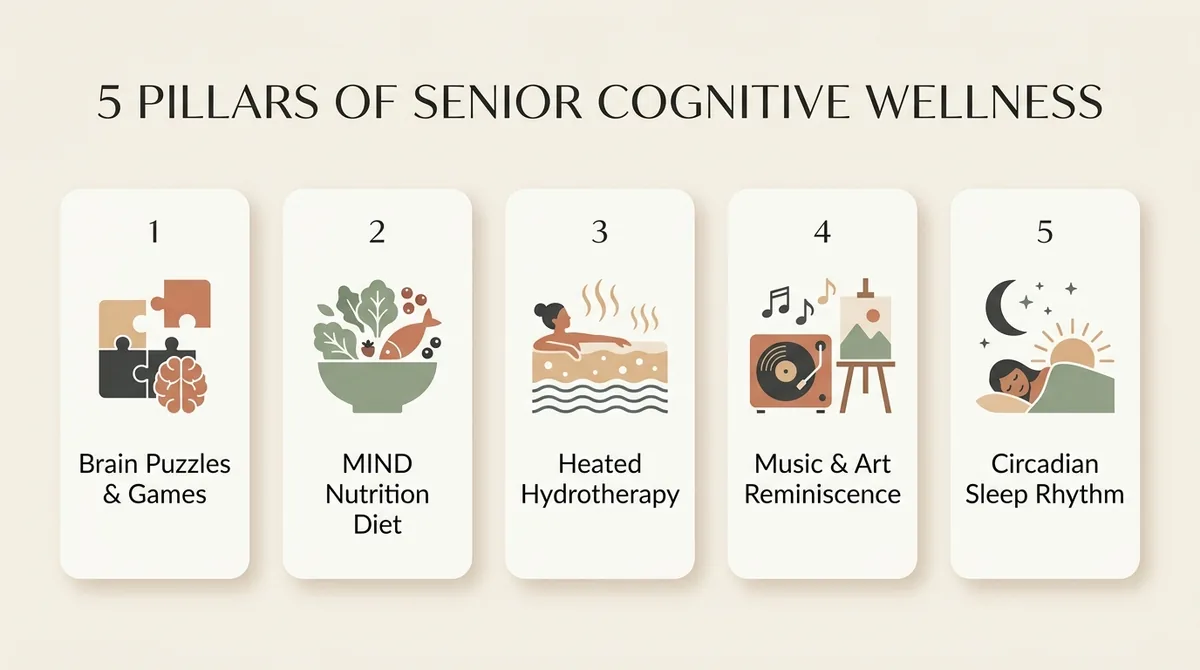
Effective cognitive wellness routines combine five proven pillars: neurobic brain training, an anti-inflammatory MIND nutrition plan, low-impact aerobic exercises like hydrotherapy, structured social art therapy and circadian-aligned sleep support to protect memory and elevate daily mood.
Clinical research shows the aging brain maintains neuroplasticity when given multi-sensory stimulation. In thoughtful retirement communities, cognitive wellness routines for retired seniors are integrated naturally into each day through attractive, purposeful routines:
- Targeted Neurobics & Brain Puzzles: Everyday routines become gentle brain exercises. Seniors engage in dual-task exercises, such as identifying native trees along walking trails, solving handcrafted wooden puzzles, playing chess or learning conversational phrases in a new language, activating multiple neural circuits simultaneously.
- Anti-Inflammatory MIND Nutrition: Working with clinical nutritionists, dining teams prepare menus inspired by the MIND diet adapted to Indian palates. Meals feature cold-pressed oils, antioxidant berries, walnuts, flaxseeds, leafy greens like palak and methi, and whole millets while cutting excess sugars. Learn how meals are planned in our guide on how senior living manages diabetic and senior nutrition in India.
- Low-Impact Aerobic Movement & Hydrotherapy: Physical exercise stimulates Brain-Derived Neurotrophic Factor for memory retention. Seniors participate in chair yoga, walking clubs and warm-water hydrotherapy. In a heated indoor pool, seniors move without joint pain, boosting cerebral circulation. Read more in our guide on heated pool hydrotherapy for seniors.
- Expressive Arts & Music Reminiscence: Melodies and tactile arts bypass damaged verbal pathways to reach emotional memories stored deep in the brain. Weekly sessions with classical ragas, group bhajans, pottery and watercolours trigger pleasant memories, ease evening restlessness and lift spirits.
- Circadian Lighting & Restful Sleep: Sleep disruptions and sundowning are common in early dementia. Communities schedule natural morning sunlight exposure and switch to soothing amber lights after sunset, regulating melatonin and encouraging restful nighttime sleep.
Looking for Hospital-Backed Senior Living in Central India?
URJA by CHL offers 100% freehold homes, specialized cognitive wellness routines and 24/7 clinical emergency care backed by CHL Hospitals Indore.
Discover URJA By CHLAge-Friendly Campus Design for Memory Care and Early Dementia Support
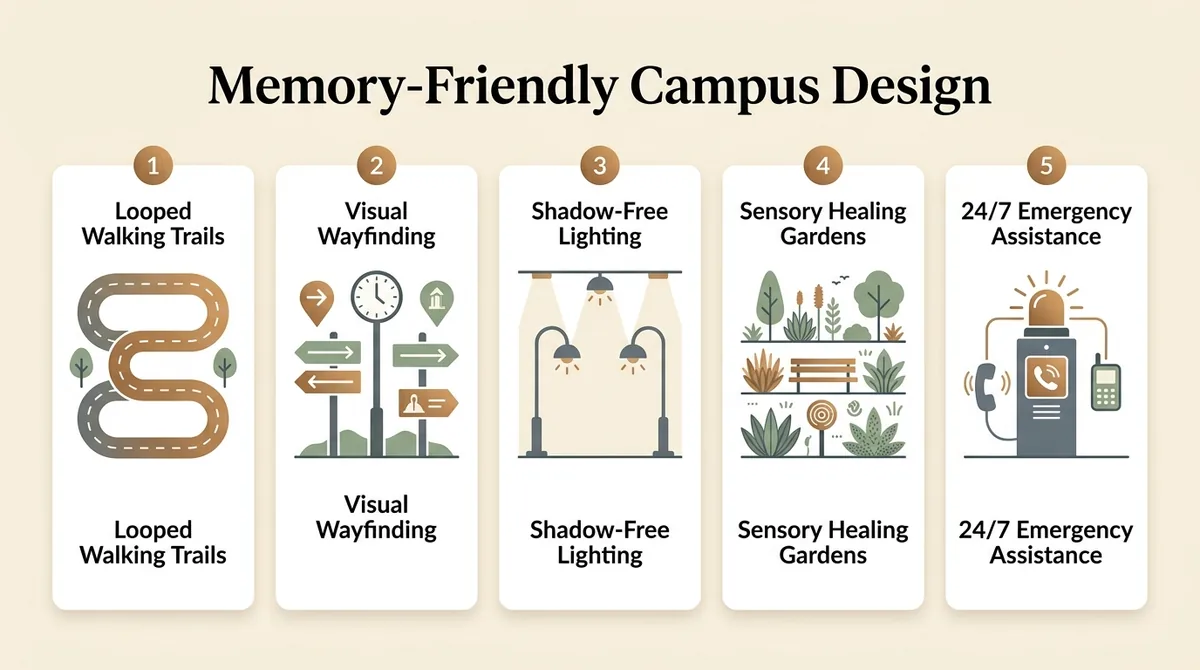
Memory-friendly architecture uses continuous looped walking trails without dead-ends, colour-coded wayfinding, non-reflective flooring, circadian lighting and therapeutic sensory gardens to prevent disorientation, reduce fall risks and encourage independent mobility.
A senior's physical environment heavily influences their emotional calm. Long, sterile hallways with identical doors provoke confusion and anxiety. Thoughtful age-friendly campus design for memory care turns living spaces into intuitive, self-guiding homes:
- Continuous Looped Pathways: Hallways and garden paths form continuous loops, gently returning seniors to central lounges without dead-ends or locked gates that spark frustration and anxiety.
- Intuitive Colour Coding & Wayfinding: Residential corridors use distinct warm earth tones such as terracotta, sage and ochre paired with clear visual icons. Memory shadow boxes placed outside apartment doors showcase personal family photos, making flat identification effortless.
- Shadow-Free Circadian Lighting: Elderly eyes need higher lux levels. Indirect, glare-free LED lighting eliminates floor shadows, which seniors with depth perception issues frequently mistake for sudden drops or obstacles.
- Therapeutic Sensory Gardens: Outdoor courtyards feature raised planter beds with tactile herbs like tulsi, rosemary, lemongrass and mint along with gentle stone fountains. Birdsong in Miyawaki mini-forests and herbal scents ground anxious residents.
- Discreet Safety Systems: Emergency pull cords sit at waist and floor levels in bathrooms and bedrooms, while unobtrusive perimeter access points ensure seniors remain safe without feeling restricted. Learn more in our checklist of senior-friendly features every retirement home should have.
Daily Brain Health Activities for Elderly in India: A Structured Routine
A structured daily routine balances morning pranayama, gentle physical movement, interactive memory games, nutritious communal dining and quiet evening relaxation to keep minds alert while preventing afternoon mental fatigue and sundowning confusion.
Predictable schedules significantly reduce anxiety for seniors with memory shifts. In premier communities, brain health activities for elderly in India follow a familiar, comfortable rhythm:
| Time Slot | Activity & Cognitive Focus | Therapeutic & Health Benefits |
|---|---|---|
| 06:45 AM – 08:00 AM | Pranayama, gentle yoga and morning garden stroll | Oxygenates brain tissue, sets circadian rhythm and improves balance. |
| 08:30 AM – 09:30 AM | Nutritious breakfast and newspaper reading circle | Encourages verbal expression, current affairs recall and camaraderie. |
| 10:30 AM – 11:45 AM | Neurobics, tactile crafts and crosswords in Uma Club | Sharpens fine motor skills, spatial reasoning and problem-solving. |
| 12:45 PM – 02:00 PM | Wholesome community lunch and quiet rest | Prevents afternoon sensory fatigue and supports digestive health. |
| 04:30 PM – 05:45 PM | Heated pool hydrotherapy or therapeutic gardening | Releases physical tension, builds muscle tone and provides sensory grounding. |
| 06:00 PM – 07:15 PM | Classical music reminiscence, bhajans and evening chai | Alleviates sundowning restlessness through melodic auditory recall. |
| 07:45 PM – 09:00 PM | Light sattvic dinner and calming herbal tea | Promotes easy digestion and restful, uninterrupted nighttime sleep. |
Active engagement prevents long spells of solitary rumination. Interacting with peers keeps conversational vocabulary sharp and gives each day a clear purpose. Explore our overview of senior wellness programs in Indore.
Comparing Traditional Eldercare vs. Hospital-Backed Memory Care Communities
Hospital-backed memory communities provide structured cognitive exercises, peer companionship, purpose-built fall-safe architecture and round-the-clock medical care, avoiding the isolation, safety hazards and caregiver burnout typical of home care with domestic attendants.
Families wrestling with memory care choices often compare keeping an elderly parent at home with a hired attendant against moving to a specialized community:
| Care Feature | Living at Home with Domestic Attendant | Hospital-Backed Active Senior Community |
|---|---|---|
| Cognitive Stimulation | Unstructured; heavy reliance on television or phones; frequent boredom. | Daily guided neurobics, music reminiscence, gardening and group discussions. |
| Social Connection | Severe social isolation; limited interaction outside occasional family visits. | Active peer group of retired professionals, joint dining and lively celebrations. |
| Physical Safety & Falls | High risk from standard bathroom curbs, slippery flooring and dark passages. | 100% barrier-free campus, non-skid floors, grab rails and emergency call cords. |
| Emergency Response | Family must arrange ambulances and navigate traffic during critical events. | 24/7 on-campus nursing station, doctor on call, ICU ambulance and hospital backing. |
| Nutritional Oversight | Hard to manage strict diabetic or low-sodium requirements consistently. | Clinical dietitian-monitored 5-meal schedule tailored to individual lab reports. |
| Caregiver Burnout | Severe emotional strain on adult children and spouse managing erratic moods. | Professional staff handle care routines, allowing family visits to remain loving. |
| Financial Predictability | Unpredictable monthly expenses on domestic staff turnover, nurses and transport. | Predictable monthly maintenance fees covering care, dining, security and club amenities. |
To understand the comprehensive financial structure of senior living communities, including maintenance deposits and health packages, review our detailed guide on the real cost of retirement homes in India.
Have Questions About Senior Memory Care & Healthcare Facilities?
Our healthcare coordinators can arrange a private campus tour, walk you through our assisted care suites and discuss tailored neuro-wellness routines for your parents.
WhatsApp Our Care TeamHow to Choose the Right Memory-Friendly Retirement Community in India
To choose the right memory-friendly community, evaluate five criteria: verifiable hospital backing with geriatric medical staff, safe looped architecture without dead-ends, structured daily cognitive schedules, transparent 100% freehold RERA ownership and genuine social warmth among residents.
Selecting a community for an elderly parent is a significant milestone. Conducting thorough on-site due diligence ensures long-term peace of mind:
- Check Geriatric Medical Governance & Hospital Backing: Verify whether the community has an established clinical partner. For example, URJA by CHL is developed with the 25-year clinical heritage of CHL Hospitals Indore, guaranteeing 24/7 nursing oversight, physician visits and rapid tertiary emergency admission. Explore our facilities on our healthcare amenities page.
- Inspect Campus Layout & Fall Prevention: Walk the grounds together. Check for anti-skid surfaces, smooth continuous handrails, rounded wall corners and intuitive wayfinding. Confirm lifts are stretcher-sized with power backup rescue devices.
- Review Cognitive Programming & Staff Sensitivity: Inquire whether caregivers receive specialized training in dementia validation techniques and de-escalation for sundowning episodes. Confirm that daily activities are purposeful and engaging.
- Verify 100% Freehold Ownership vs Leaseholds: Ensure the project issues a registered sale deed under state RERA guidelines. Freehold ownership secures your family capital, allows rental income and passes smoothly to heirs. Read our legal breakdown of RERA legal rights and rules for senior living in India.
- Taste the Food and Observe Resident Life: Have a meal in the community dining hall. Check that food is nutritious, fresh and flavorful. Notice whether residents seem happy, active and treated with genuine respect.
Taking these practical steps ensures parents transition into an environment where they feel respected and protected. For more evaluation advice, explore our guide on choosing the right apartment for elderly parents in India.
FAQs
1. How do memory care active senior living communities in India support seniors with early dementia and Mild Cognitive Impairment?
Memory care active senior living communities in India support seniors through structured daily cognitive exercises such as neurobics and memory puzzles, anti-inflammatory MIND nutrition, safe looped campus architecture that prevents disorientation, continuous social interaction with peers and round-the-clock geriatric nursing care backed by specialized hospitals.
2. What is the difference between mild age-related forgetfulness and early dementia in seniors?
Age-related forgetfulness involves occasionally forgetting names or misplacing reading glasses but recalling them later. Early dementia or Mild Cognitive Impairment involves persistent short-term memory lapses, getting lost in familiar surroundings, difficulty managing bank accounts or medications and noticeable mood or personality shifts that interfere with daily self-care.
3. Can a senior citizen living with early memory loss live independently in an active senior living community?
Yes. In the early stages of memory loss, seniors thrive in active senior living communities because they retain their independence inside a private, barrier-free home. The community removes domestic stressors like cooking, cleaning and maintenance while providing unobtrusive medical checkups, guided social routines and prompt emergency response.
4. How does campus architecture in memory care retirement homes prevent wandering and sundowning distress?
Campuses use continuous looped walking trails without confusing dead-ends, distinctive colour-coded wings, personal memory shadow boxes outside doors, high-lumen shadow-free circadian lighting to reduce late-afternoon disorientation and discreet perimeter security with electronic access gates.
5. How does URJA by CHL in Indore incorporate memory care and geriatric healthcare into its senior living community?
URJA by CHL integrates geriatric memory care through on-campus 24/7 nursing desks, doctor consultations, heated indoor hydrotherapy pools, sensory Miyawaki gardens, structured cognitive clubs at the Uma Club and clinical dietitian-planned meals, all directly backed by the tertiary medical expertise and emergency ICU infrastructure of CHL Hospitals Indore.