Retirement should represent a rewarding chapter of freedom, reflection and creative pursuits. Yet for thousands of older adults across India, departing from workplace routines often marks the onset of an invisible struggle: social isolation. As adult children relocate to metropolitan tech hubs or move abroad for careers, many aging parents find themselves residing in quiet family houses or gated city apartments where entire days pass without meaningful human dialogue. The familiar warmth of the traditional joint family system has largely yielded to nuclear households, leaving retirees vulnerable to emotional disconnection.
Understanding how to prevent isolation and loneliness in retired seniors India is no longer just a question of leisure; it has become an essential public health priority. Clinical geriatric research confirms that chronic isolation speeds cognitive decline, elevates cardiovascular risks and triggers late-life depression. Fortunately, forward-thinking families and active seniors are embracing a proactive solution: transitioning to managed senior living communities designed around social integration, shared hobbies, intergenerational celebrations and daily communal warmth.
How to Prevent Isolation and Loneliness in Retired Seniors India Through Active Communities
Preventing senior isolation requires moving beyond solitary home routines toward structured community life. Purpose-built retirement campuses eliminate involuntary loneliness by integrating daily social gatherings, collaborative hobby clubs, peer dining and round-the-clock wellness oversight into an elder-friendly neighborhood.
Overcoming isolation begins with recognizing that loneliness among elders is rarely a personal choice. In urban Indian cities like Delhi, Mumbai, Pune and Indore, retirement often coincides with shrinking physical mobility, loss of a spouse or the relocation of long-time neighborhood friends. When a senior spends hours staring at a television or scrolling passively through a mobile screen, the lack of authentic emotional exchange takes a severe psychological toll.
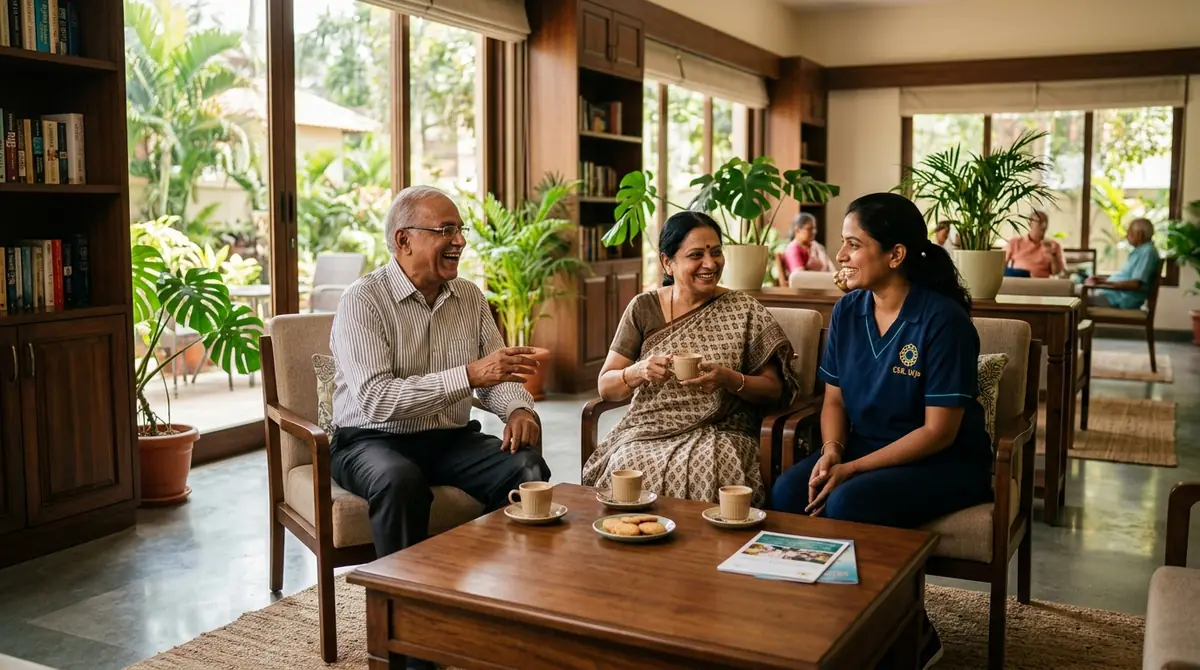
Modern senior living spaces resolve this structural barrier by embedding companionship into daily architecture. Instead of living behind locked apartment doors, seniors reside among peers who share similar life stages, cultural memories and intellectual interests. Moving freely across barrier-free garden promenades and landscaped courtyards, residents naturally strike up conversations during morning strolls, library visits and evening chai gatherings.
Equally valuable is removing mundane domestic burdens that deplete elder energy. When professional campus management oversees housekeeping, property repairs, security and nutritional meal preparation, seniors regain the mental bandwidth to pursue meaningful friendships. Explore how thoughtfully designed campuses address social well-being in our guide on how retirement communities improve senior social life in India.
How Social Clubs and Active Ageing Mental Wellness Programs Rebuild Purpose
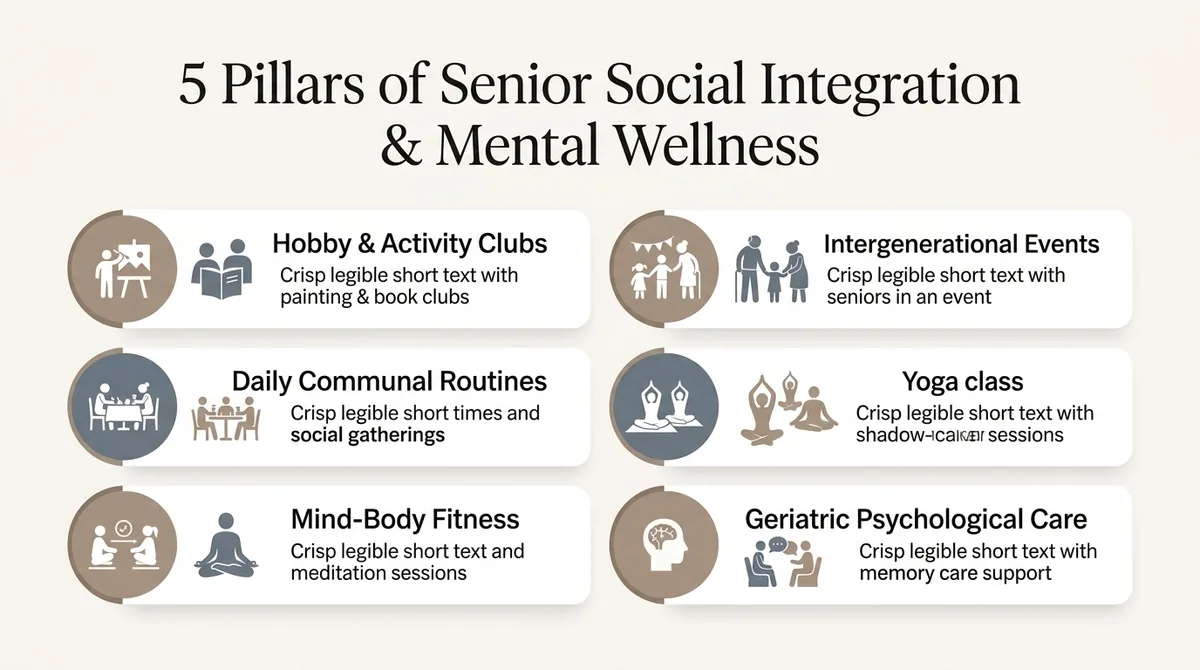
Active ageing mental wellness programs combine creative hobby clubs, cognitive stimulation games, expressive arts and group fitness to give retirees a clear daily sense of purpose. Dedicated social clubhouses serve as cultural epicentres that foster authentic friendships and intellectual vitality.
Meaningful social integration requires structured avenues where retirees can explore passions they shelved during their working years. Within progressive retirement campuses, active ageing mental wellness programs serve as the cornerstone of psychological vitality. These programs replace idle hours with stimulating, collaborative group pursuits:
- Specialised Cultural and Literary Circles: Book discussion groups, poetry recitals (kavi sammelans) and lecture series allow retired academicians, civil servants and corporate professionals to exchange perspectives on philosophy, history and current affairs.
- Creative and Expressive Art Workshops: Pottery, watercolor painting, theater workshops and clay sculpting provide tactile outlets for self-expression, helping seniors release tension and discover new creative talents.
- Strategic Brain Games and Tournaments: Bridge clubs, chess leagues, carrom face-offs and crossword groups stimulate executive cognitive function while building playful camaraderie among neighbors.
- Music Reminiscence and Group Chanting: Weekly classical musical evenings, devotional satsangs and group choral singing release endorphins, calm nervous tension and spark cherished nostalgic memories.
- Horticulture and Organic Gardening Clubs: Tending raised herb planter beds and aromatic flower gardens fosters physical grounding, sensory stimulation and the shared satisfaction of nurturing green life.
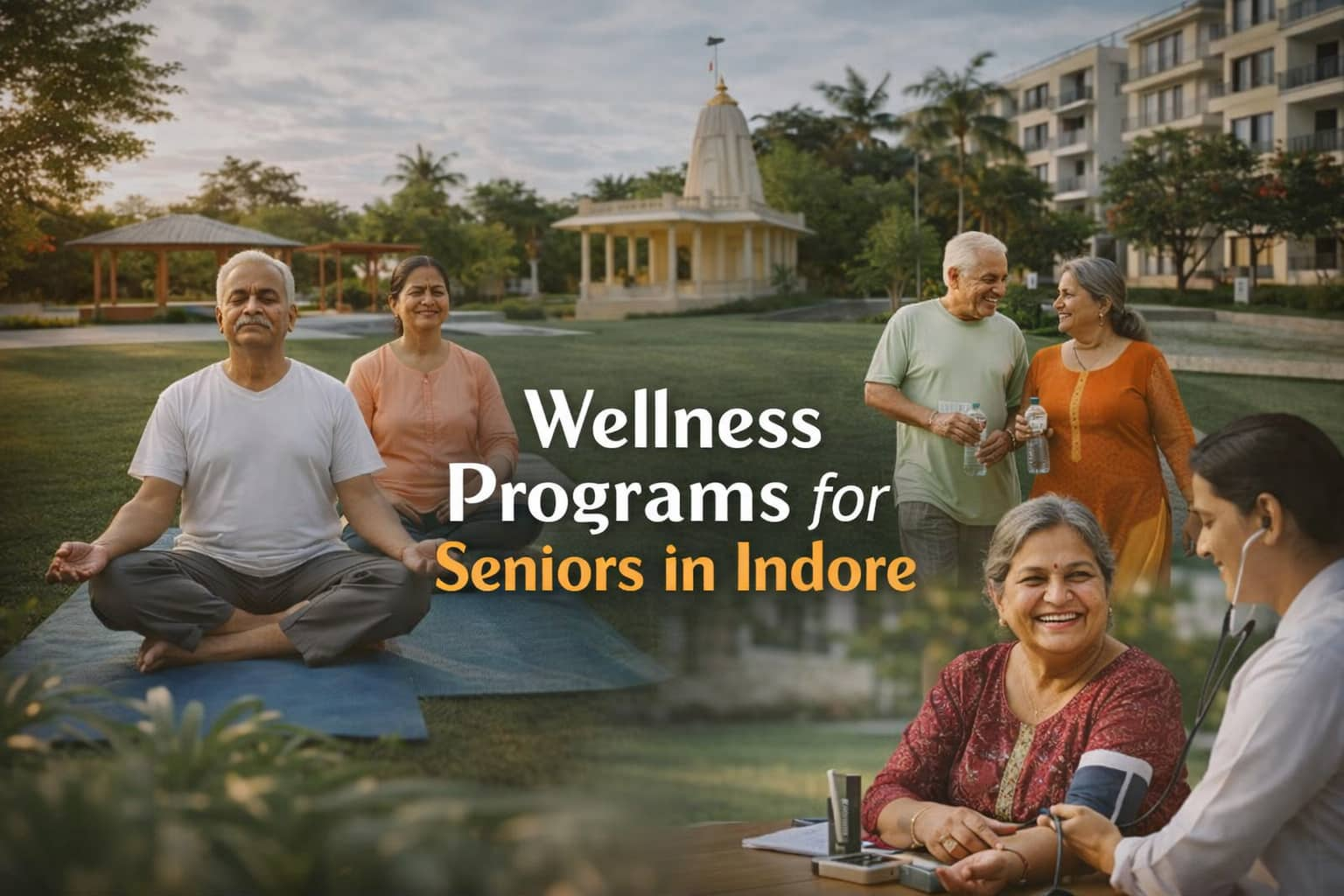
For retired couples seeking enriching social lives in Central India, social clubs for retired couples in Indore such as the Uma Club at URJA by CHL provide an inspiring model. Rather than settling for sedentary afternoons, couples can join fellow residents for friendly badminton matches, library reading sessions or cooking masterclasses led by guest chefs. Learn more about comprehensive wellness initiatives in our detailed guide to wellness programs for seniors in Indore.
Discover Purposeful Senior Living in Central India
URJA by CHL offers 100% freehold luxury residences, engaging clubhouse amenities at Uma Club and comprehensive geriatric healthcare backed by CHL Hospitals Indore.
Explore URJA By CHLThe Emotional Power of Intergenerational Community Events in Senior Living
Intergenerational living programs bridge the generational divide by connecting seniors with children, youth volunteers and creative students. Mentorship circles, festival celebrations and shared recreational events restore a profound sense of family continuity and social relevance for elders.
One of the deepest fears retired seniors express about moving into elder communities is feeling disconnected from younger generations. High-quality senior living campuses purposefully counter this concern through regular intergenerational community events senior living initiatives that bring youth energy directly into the neighborhood.
These programs create reciprocal benefits. Seniors possess a lifetime of professional wisdom, cultural folklore and emotional resilience that younger generations eagerly absorb. Conversely, interacting with children and young adults infuses older adults with spontaneous joy, updates them on modern perspectives and rekindles their innate nurturing instincts:
- Youth Mentorship and Storytelling Circles: Local school students and university scholars visit community clubhouses to participate in career mentorship dialogues, oral history recordings and traditional storytelling hours.
- Grandchildren-Friendly Weekend Amenities: Thoughtfully designed campuses incorporate dedicated children play zones, shallow splash pools and games arcades so visiting grandchildren eagerly anticipate weekend visits with their grandparents.
- Collaborative Technology Workshops: Younger volunteers conduct gentle digital literacy clinics, teaching seniors how to edit digital photo albums, connect with distant relatives via video calls and explore online audiobooks.
- Grand Festive Celebrations: Community campuses celebrate Diwali, Holi, Navratri, Ganesh Utsav and Independence Day with lively collaborative performances, folk dances and feasts involving families and neighboring communities.
- Multi-Generational Fitness and Hydrotherapy Days: Gentle aquatic activities and walking rallies encourage grandparents, adult children and grandchildren to exercise together in heated pools. Discover the therapeutic physical and mental benefits in our overview of heated pool hydrotherapy for seniors.
Daily Community Routines in Retirement Homes That Foster Belonging
Predictable daily community schedules harmonize physical movement, group dining, leisure discussions and quiet contemplation. Structured daily rhythms eliminate long stretches of solitary rumination while respecting individual privacy and personal autonomy.
Human beings thrive on rhythm and predictability, particularly in the post-retirement years when external office deadlines no longer organize the day. Establishing thoughtful daily community routines in retirement homes ensures that no senior spends an entire day without supportive human engagement:
| Time Slot | Daily Community Routine | Social & Emotional Benefits |
|---|---|---|
| 06:30 AM – 07:45 AM | Morning pranayama, yoga and garden walking club | Stimulates natural endorphins, oxygenates the mind and builds walking friendships. |
| 08:15 AM – 09:30 AM | Communal breakfast and newspaper review circle | Encourages healthy debate on current affairs, dispelling early morning loneliness. |
| 10:30 AM – 12:00 PM | Creative workshops, music classes or library reading | Stimulates cognitive neuroplasticity and allows personal hobbies to flourish. |
| 12:30 PM – 02:00 PM | Fresh farm-to-table lunch in community dining hall | Ensures balanced nutrition and provides relaxed social dining with friends. |
| 02:00 PM – 04:00 PM | Afternoon siesta, reading and personal rest | Respects personal privacy and recharges mental and physical energy. |
| 04:30 PM – 06:00 PM | Heated pool hydrotherapy, badminton or card games | Promotes cardiovascular mobility and light-hearted social recreation. |
| 06:15 PM – 07:30 PM | Evening tea, campus satsang and sunset garden stroll | Eases twilight anxiety, offering spiritual grounding and social comfort. |
| 08:00 PM – 09:15 PM | Light sattvic dinner, music recital or film screening | Fosters warm evening camaraderie, preparing residents for peaceful sleep. |
By naturally structuring the day around engaging group touchpoints, residents always have an event or friendly conversation to look forward to. Read a comprehensive breakdown of typical senior living schedules in our guide on the daily routines in senior living homes in India.
Traditional Home Isolation vs. Hospital-Backed Senior Communities
While living alone in a family home often leads to social isolation, safety hazards and caregiver anxiety, hospital-backed senior communities provide active companionship, barrier-free living, culinary care and 24/7 medical security under one roof.
Families evaluating care arrangements for aging parents often compare keeping them in their current independent residence versus moving into a purpose-built senior community:
| Care Feature | Aging Alone in a Traditional Home | Hospital-Backed Community (URJA by CHL) |
|---|---|---|
| Social Environment | Isolated days; limited interaction beyond domestic maids or occasional phone calls. | Active peer community of like-minded seniors, social clubs and daily recreational events. |
| Emotional Well-Being | High risk of depressive symptoms, chronic anxiety and cognitive decline from disuse. | Uplifting community lifestyle, professional counseling support and daily purposeful routines. |
| Safety & Fall Prevention | Traditional wet bathrooms, steep stairs and slippery tile floors present serious fall hazards. | 100% barrier-free design, anti-skid surfaces, emergency pull cords and wide corridors. |
| Medical Emergency Care | Family or neighbors must scramble to find doctors, call ambulances and manage traffic. | 24/7 on-campus nursing station, emergency triage room, on-call doctors and direct hospital ICU backing. |
| Nutrition & Dining | Monotonous cooking, irregular meal timings and difficulty adhering to dietary restrictions. | Clinical dietitian-planned 5-meal schedule with fresh, hygienic, diabetic-friendly menus. |
| Family Relationships | Adult children experience constant guilt and stress over parents safety and loneliness. | Visits become joyful quality time while on-site professionals manage daily care and logistics. |
| Asset Security | Vulnerable to municipal title disputes, maintenance contractor fraud and tenant issues. | Legally sound 100% freehold RERA-registered ownership passing transparently to legal heirs. |
To understand how hospital integration ensures total physical and emotional safety, explore our specialized healthcare amenities page.
Have Questions About Senior Living & Social Wellness in Indore?
Our compassionate senior living advisors are available to schedule a personalized campus tour, share activity calendars and discuss lifestyle accommodations for your parents.
WhatsApp Our Community Team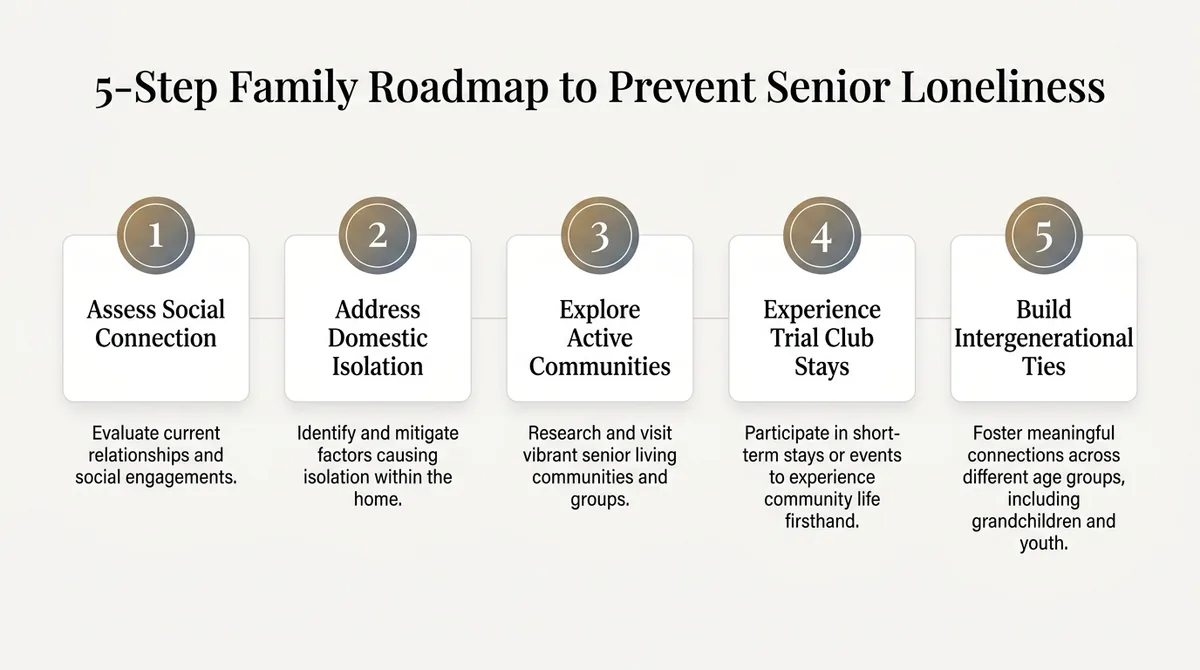
5 Practical Steps for Families to Eliminate Senior Isolation
Eliminating senior isolation involves a compassionate, stepwise family strategy: recognizing subtle warning signs of loneliness, addressing domestic isolation, touring active communities, testing campus life through short stays and securing transparent freehold retirement living.
Helping an aging parent transition from solitary living to an active community requires sensitivity, open family dialogue and disciplined due diligence. Follow this five-step practical roadmap:
- Assess the Subtle Signs of Emotional Isolation: Look beyond physical health during visits or video calls. Notice whether a parent has lost interest in favorite cooking recipes, skipped routine medications, neglected personal grooming or expressed feelings of emptiness and purposelessness. Acknowledging loneliness openly without judgment is the first step toward healing.
- Address Underlying Domestic and Physical Roadblocks: Identify factors that discourage parents from venturing outside. Is fear of falling on steep external steps keeping them indoors? Are heavy traffic and lack of walkable pedestrian paths preventing them from seeing friends? Recognizing these environmental limitations clarifies why an elder-friendly campus is necessary.
- Explore Communities with Established Social Infrastructure: When researching retirement homes in India, examine the social calendar as thoroughly as the medical facilities. Check whether the community employs dedicated activity coordinators, maintains fully equipped hobby clubs and hosts regular cultural gatherings.
- Experience Community Life Through Trial Club Stays: Before making a permanent transition, encourage parents to spend a long weekend or attend an open-house festival at an active retirement campus. Experiencing the warmth of communal dining, sharing laughs over bridge games and joining morning yoga sessions allows seniors to envision their own flourishing future. Review our guide on the cost of retirement homes in India to plan family finances transparently.
- Select a Freehold RERA-Approved Community: Ensure your financial investment is completely protected. Choose a community that offers registered sale deeds under state RERA guidelines, preserving your capital appreciation while granting your parents lifelong dignity. Review our comprehensive legal analysis of RERA legal rights for senior homebuyers in India before finalizing any reservation.
FAQs
1. What are the most effective ways to prevent isolation and loneliness in retired seniors in India?
The most effective ways to prevent isolation include transitioning to managed senior living communities with active peer circles, participating in daily hobby and bridge clubs, engaging in morning group yoga, attending intergenerational cultural events and establishing predictable daily routines that ensure continuous social contact.
2. Why is social isolation considered a major health hazard for elderly adults?
Chronic isolation elevates cortisol levels, increases systemic inflammation and raises the risk of coronary heart disease and stroke by nearly 30 percent. Solitary living also deprives the brain of vital conversational stimulation, accelerating cognitive decline and triggering late-life depression.
3. How do social clubs for retired couples in Indore enhance daily emotional health?
Social clubs provide retirees with welcoming venues for literary debates, creative arts, badminton, card games and festival celebrations. They give retired couples an active peer network of accomplished professionals, helping them rebuild purpose and make lasting friends.
4. What role do intergenerational community events play in senior living communities?
Intergenerational events connect retirees with youth through mentorship circles, technology workshops, festival performances and family weekend visits. This enriching interaction bridges age gaps, preserves cultural continuity and gives older adults a renewed sense of social relevance.
5. How does URJA by CHL in Indore support active social integration and senior mental wellness?
URJA by CHL fosters active community life through its Uma Club, landscaped central courtyards, heated hydrotherapy pool, daily hobby workshops and communal dining. Medical peace of mind is reinforced with 24/7 nursing stations and hospital backing from CHL Hospitals Indore.