
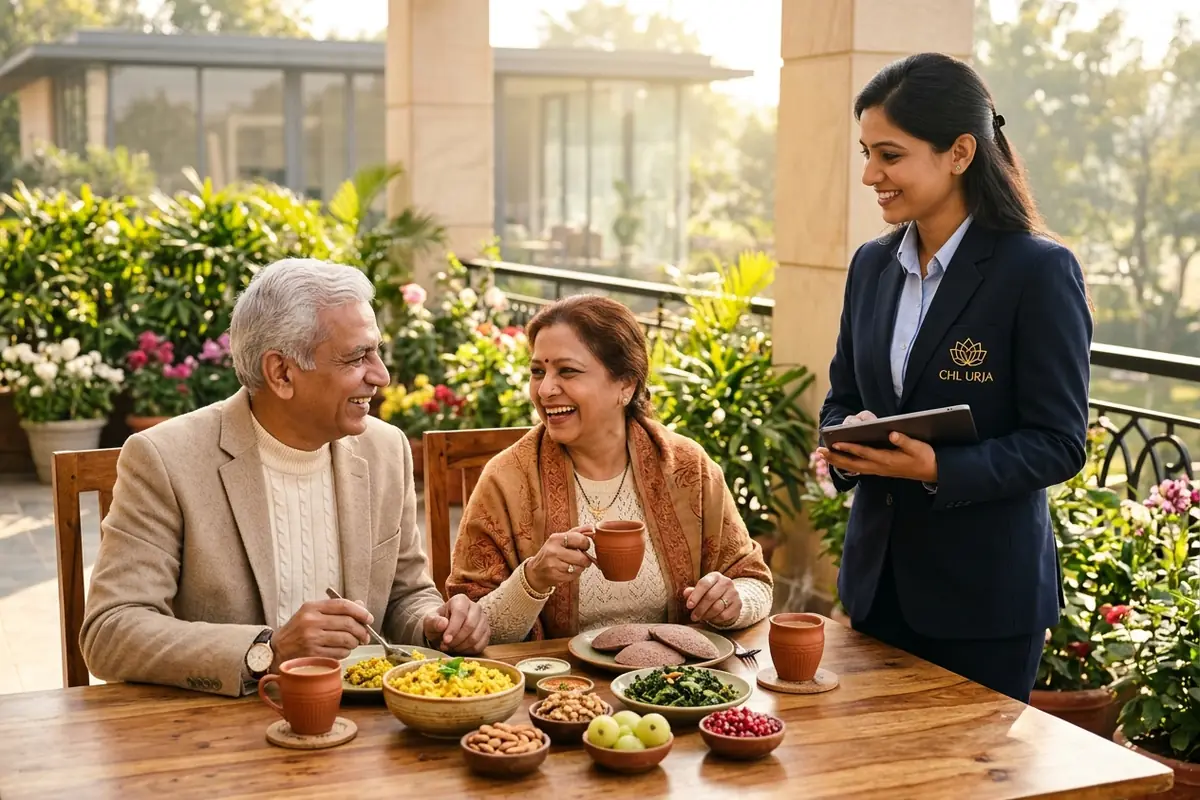
Ask any Indian family visiting parents in late November what really happens in the kitchen when children are away. On crisp 11°C mornings, older couples rarely skip meals out of carelessness. They skip proper cooking because washing cold greens, soaking lentils and scrubbing pots twice a day gets tiring.
That quiet kitchen tiredness shows up in small ways. Lunch shrinks to leftover rice and pickle. Dinner turns into two biscuits dipped in sweet chai because nobody wants to roll fresh rotis at 8:00 PM. Within six weeks, morning energy drops and a common winter cough lingers twice as long as usual.
Fixing this doesn't mean handing parents bland bowls of boiled food. A thoughtful winter immunity diet and daily nutrition for active seniors India blends familiar home flavours with steady medical sense. When active communities serve hot, seasonal food at shared tables, eating well stops feeling like a chore and becomes the happiest part of the day.
Why a Winter Immunity Diet and Daily Nutrition for Active Seniors India Matters After Sixty
Cold Indian winters dull thirst signals, limit morning sunlight for vitamin D and slow digestion in adults over sixty. A planned winter immunity diet supplies warming nutrients, regular protein and steady fluids to lower seasonal infections, steady blood sugar and keep daily energy high.
Winter quietly changes how the body works after sixty. Even in cities with pleasant afternoons like Indore or Pune, cooler mornings between November and February catch many families by surprise.
Cold kills thirst first. Older adults often drink half the water they had in October, which slows down digestion and leaves them feeling sluggish by afternoon. Shorter winter days and heavy sweaters also cut back morning sunlight, dropping Vitamin D levels right when viral coughs start making the rounds.
Then there's the hidden protein gap. When a couple cooks for just two people on chilly evenings, meals naturally drift toward toast, poha, potatoes and sweet snacks. Indian Council of Medical Research (ICMR-NIN) guidelines point out that adults over sixty need regular protein across the day to prevent gradual muscle loss in the legs and arms.
Untrained domestic cooks rarely hit the right balance either. Meals often arrive floating in extra oil and salt, or turn out so plain that parents barely touch half their plate. Good nutritionist curated daily meal plans for seniors pay close attention to both seasoning and food warmth every cold morning.
Warm meals also work alongside clean outdoor air to protect older lungs from winter congestion. You can read how campus greenery supports breathing in our overview of clean air retirement communities for senior health in India.
Paying attention to senior nutrition for winter immunity and strength keeps parents independent. Strong thigh muscles make morning walks comfortable, while steady zinc and Vitamin C help the body bounce back faster from seasonal sniffles.

Indian Superfoods, Low-GI Grains and Heart-Safe Winter Menu Design
Good winter food comes from fresh local markets rather than supplement bottles. Pairing warming millets like bajra and ragi with fresh amla, leafy methi, soaked nuts and measured cold-pressed oils keeps blood sugar steady, protects heart health and builds seasonal strength naturally.
India's winter harvest already grows everything older adults need. You don't need imported powders or fancy superfoods when local mandis are full of fresh greens, roots and winter grains.
Here is how thoughtful senior kitchens build flavour and warmth into everyday plates:
- Stone-ground bajra, ragi and jowar rotis release energy slowly without sudden sugar jumps. Together they anchor a diabetic friendly winter diet for active retirees with plenty of iron and calcium.
- Fresh amla, pink guava, bathua, spinach, methi leaves and raw turmeric pack natural Vitamin C and plant nutrients straight from the winter harvest.
- Yellow moong dal, sprouted chana, soft homemade paneer, lunchtime curd and soaked walnuts give easy-to-digest protein that keeps legs strong without feeling heavy at night.
- Kitchens season dishes with ajwain, dry ginger (sonth), roasted cumin, black pepper and cinnamon in measured cold-pressed mustard or groundnut oil. That gives low sodium heart healthy meals for elderly diners well within the WHO 5-gram daily salt limit.
- Warm cinnamon water, adrak-tulsi kadha and clear peppered vegetable soups keep hydration steady even when nobody wants cold water at 7:00 AM.
Look at how daily winter eating compares across three common setups:
| Daily Meal Factor | Cooking Alone | Home Tiffin | URJA Uma Club Dining |
|---|---|---|---|
| Winter Variety | 2 or 3 easy repeats | Heavy potato gravies | Fresh winter greens and millet rotation |
| Oil and Salt | Depends on domestic cook | Extra refined oil and salt | Measured cold-pressed oils and fresh herbs |
| Diabetic Needs | Tiring to cook two meals | Same common food for all | Separate low-sugar and Jain meal tags |
| Serving Warmth | Often reheated leftovers | Gets lukewarm in transit | Cooked fresh in small hot batches |
| Mealtime Company | Eating quietly cuts appetite | Plastic box eaten alone | Friendly neighbour tables that lift mood |
Families managing long-standing Type 2 diabetes can read more about year-round blood sugar meal planning in our guide on how active senior living communities manage diabetic diets and nutrition in India.
Taste Fresh Seasonal Dining at URJA by CHL Indore
Tour our 40,000 sq. ft. Uma Club in Indore, explore our winter chef menus and see how 100% freehold RERA-registered homes pair daily comfort with 24/7 support from CHL Hospitals.
Inside the 5 Meal Daily Schedule in Senior Living: From Dawn Kadha to Light Dinner
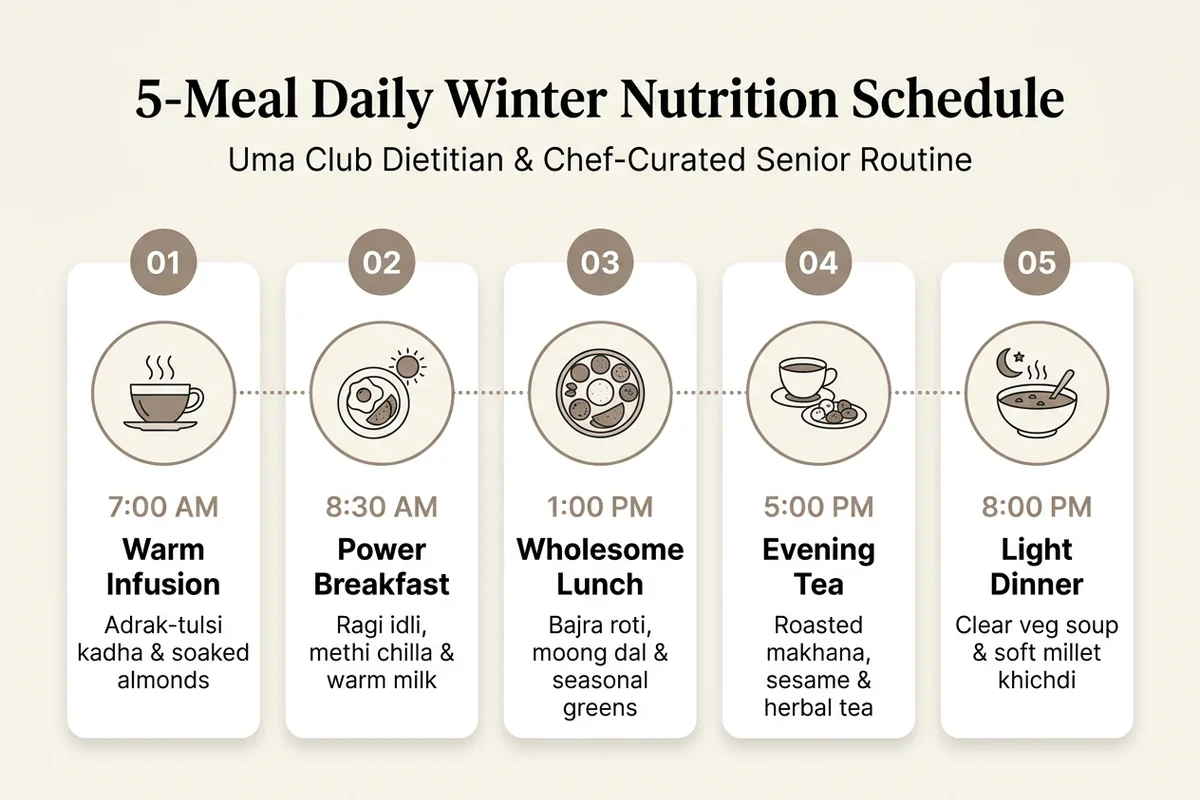
A steady five-meal winter rhythm spaces warm, comfortable portions three to four hours apart: herbal infusions at 7:00 AM, breakfast at 8:30 AM, seasonal lunch at 1:00 PM, light snacks at 5:00 PM and an easy-to-digest soup or khichdi dinner at 8:00 PM.
When you eat matters just as much as what sits on the plate. Going eight or nine hours between lunch and dinner drops blood sugar in the afternoon and triggers nighttime acidity after a heavy late meal. Keeping a 5 meal daily schedule in senior living gives the stomach steady, comfortable fuel from sunrise to bedtime.
Here is what a winter day of dining looks like across those five windows:
| Time | Meal Window | Winter Menu Example | Why It Helps |
|---|---|---|---|
| 7:00 AM | Warm Infusion | Adrak-tulsi kadha, soaked almonds and walnut | Clears morning chill and wakes digestion |
| 8:30 AM | Power Breakfast | Ragi idli, methi moong chilla and fresh guava | Steady morning energy and Vitamin C |
| 1:00 PM | Midday Lunch | Bajra roti, yellow dal, sarson saag and salad | Builds iron, fibre and daily strength |
| 5:00 PM | Evening Tea | Roasted makhana, sesame mix and herbal tea | Warm crunch without deep-fried snacks |
| 8:00 PM | Light Dinner | Carrot-ginger soup and soft millet khichdi | Light digestion and calm sleep |
Nobody wants a one-size-fits-all hostel menu. Creating personalized geriatric diet plans in India starts by listening to each resident's health history and kitchen habits:
- Dietitians begin with a friendly check of blood sugar, cholesterol, blood pressure, Vitamin D and chewing comfort alongside campus doctors.
- Every household shares pure vegetarian, Jain (no onion or garlic), Satvik or spice preferences so familiar home dishes stay on the table.
- Kitchen chefs follow individual meal tags to prepare low-salt dal, sugar-smart festive sweets or softer dishes in separate pots.
- Menus change every two weeks with the local winter harvest so chef cooked organic dining active senior living stays fresh and free from packaged gravies.
- Health checkups guide quiet menu tweaks every few months. Optional meal plans also pause smoothly whenever parents travel to visit children.
Choice matters just as much as nutrition. At URJA by CHL, community dining stays completely flexible: parents can take their meals at Uma Club on chilly weekdays, brew their own filter coffee or cook grandchildren's favourite snacks inside their private flat kitchen, or ask for warm insulated trays at their doorstep when resting indoors. You can explore how private residences support daily independence in our guide on choosing an apartment for elderly parents in India.
Community Club Dining for Retired Seniors Indore: The URJA by CHL Standard
At URJA by CHL on Indore Bypass, the 40,000 sq. ft. Uma Club pairs fresh whole-food winter meals with warm neighbourly tables, heated indoor hydrotherapy and 24/7 nursing care backed by CHL Hospitals less than ten minutes away.
Even the finest diet chart fails if nobody feels like walking to the table. Anyone who has watched a widowed parent push food around an empty dining room knows how quickly loneliness kills appetite. Eating alongside friends turns dinner back into an event people dress up for.
Inside the 40,000 sq. ft. Uma Club at Bardari along Khandwa Road at Indore Bypass, community club dining for retired seniors Indore feels like a bright neighbourhood café rather than an institutional hall. Neighbours linger over morning chai pe mazaak, swap cricket opinions over lunch and celebrate Makar Sankranti with date-sweetened sesame treats.
Having fresh whole food dining in luxury retirement homes never takes away the joy of your own kitchen. Every RERA-registered freehold 1 BHK, 2 BHK, 3 BHK flat and Row Villa (Reg. Nos. P-MHW-25-5710 and P-IND-25-5919) comes with a modern modular kitchen where parents remain completely in charge of their own home.
Good food also ties naturally into staying active across our 15-acre Miyawaki campus with over 5,000 native trees. Well-planned active retirement culinary and wellness programs connect morning yoga and garden walks with our warm 32°C to 34°C indoor pool, covered in our guide on heated indoor pool hydrotherapy benefits for senior arthritis in India.
Meal times anchor the entire rhythm of the day without feeling rigid. Walk through how residents spend mornings, afternoons and evenings in our guide to the daily routine in senior living homes in India.
Quiet medical confidence sits behind every plate. Backed by CHL Hospitals' 25 years of medical trust across Central India, URJA keeps trained nurses on campus 24/7 with doctors on call and a dedicated ICU ambulance ready to reach tertiary hospital care in under ten minutes.
Clean civic governance and mild Malwa winters also give Indore a real edge over smog-heavy northern metros. Discover why retiring couples and overseas families pick this city in our guide on why Indore is the best city to retire in India.
A thoughtful winter immunity diet and daily nutrition for active seniors India does its quiet work every single day. Cold mornings feel easier, blood sugar and energy stay steady without endless kitchen chores and parents sit down to warm meals surrounded by friends who notice when they smile.
FAQs
What should a winter immunity diet and daily nutrition plan for active seniors in India include?
A good winter meal plan pairs warm millets like bajra and ragi with fresh vitamin C from amla and guava, leafy greens, lentils, soaked nuts and warm herbal drinks. Keeping daily salt below 5 grams helps blood pressure stay steady while supporting seasonal immunity.
How does a 5-meal daily schedule in senior living prevent winter tiredness and sugar dips?
Serving five warm, moderate meals every three to four hours avoids long afternoon hunger gaps and heavy late dinners. Regular whole grains, protein and warm fluids keep blood sugar steady, ease digestion and prevent nighttime acidity during colder months.
Can seniors with diabetes and high blood pressure enjoy traditional Indian winter foods safely?
Yes. Dietitians adapt favourite winter dishes using bajra, methi leaves, roasted sesame, black pepper and measured cold-pressed mustard or groundnut oil. Festive sweets are made with dates or stevia instead of white sugar so active retirees enjoy real flavours without sudden blood sugar rises.
Is community club dining compulsory at URJA by CHL, or can parents cook in their own apartment?
Community dining at URJA by CHL is completely optional. Every 1 BHK, 2 BHK, 3 BHK flat and row villa includes a private modular kitchen for home cooking. Residents can join Uma Club meals whenever they like, request warm doorstep trays or pause service while travelling.
How does URJA by CHL connect daily meal planning with its hospital-backed safety net?
On-campus dietitians check health records alongside 24/7 campus nurses and CHL Hospitals doctors. If blood sugar, blood pressure or hydration readings change during winter, kitchen notes update right away and CHL Hospitals emergency care sits less than ten minutes away.
Experience Winter Wellness and Club Dining at URJA by CHL Indore
Book a private tour at our Indore Bypass campus, taste seasonal chef-prepared dishes inside the 40,000 sq. ft. Uma Club and see how 100% freehold senior residences pair active daily living with CHL Hospitals' 25 years of care.