

Planning for retirement in India has evolved rapidly over the past decade. A generation ago, retirement planning primarily meant clearing mortgage liabilities and relying on adult children to manage daily domestic logistics. Today, modern Indian retirees prioritize their autonomy, seeking fulfilling lifestyles where physical wellness, intellectual engagement and high-quality geriatric healthcare are assured without placing daily care burdens on their children.
Understanding the realistic monthly expense breakdown for senior living communities in India is essential for establishing lifelong financial peace of mind. As families evaluate retirement campuses, recurring operational costs naturally take centre stage. What services do monthly maintenance fees actually cover? How do recurring eldercare expenses compare against maintaining an independent house in an urban city? Most importantly, how can retirees navigate complex deposit structures to avoid surprise deductions? This comprehensive guide provides an honest, transparent breakdown of monthly senior living expenditures across India.
Understanding the Monthly Expense Breakdown for Senior Living Communities in India
The monthly expense breakdown for senior living communities in India ranges between ₹30k and ₹55k for single residents and ₹45k to ₹80k for couples. This recurring fee covers professional housekeeping, daily nutrition, 24/7 on-site paramedical emergency response, campus security, power backup and clubhouse recreational amenities.
Evaluating retirement living expenses requires looking at the entire living ecosystem rather than comparing real estate square footage alone. In an active senior community, monthly fees do not represent mere apartment maintenance. Instead, they consolidate daily hospitality, preventative healthcare, security and community programming into a single predictable invoice.
Across India, managed retirement campuses operate across pricing tiers influenced by location and clinical infrastructure. In tier-1 metros like Mumbai or Bengaluru, monthly fees range from ₹65k to ₹120k due to elevated taxes and land costs. Conversely, regional healthcare hubs like Indore deliver equivalent clinical care and amenities at a substantially lower monthly outlay. Learn how purchase prices connect with recurring fees in our review of the cost of retirement homes in India.
Itemised Cost Components: What Does the Monthly Retainer Actually Cover?
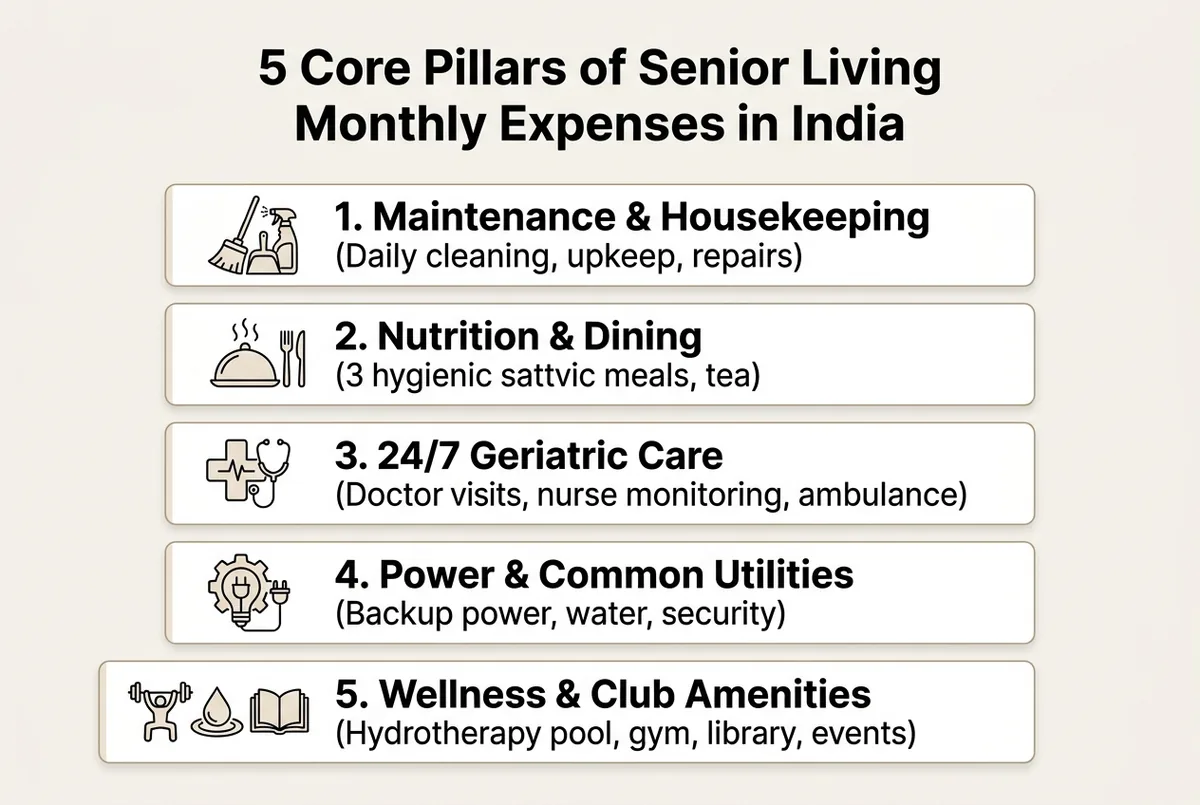
A comprehensive senior living monthly fee consolidates five core services: dining and dietary management (30–35%), facility maintenance and domestic housekeeping (25–30%), round-the-clock paramedical care and nursing oversight (15–20%), common utilities and power backup (10–12%) and clubhouse wellness facilities (8–10%).
When seniors move into a managed retirement residence, they replace fragmented utility bills with an all-inclusive monthly retainer. Here is an itemised look at the five core service components:
- Professional Housekeeping and Sanitisation: Daily vacuuming, bathroom disinfection, linen laundering and pest control maintain a clean living environment without managing domestic maids.
- Nutritious, Chef-Curated Dining Services: Three wholesome meals daily alongside herbal teas, prioritizing fresh produce, diabetic options and customized Sattvic preparations.
- 24/7 Clinical Oversight and Emergency Triage: Round-the-clock registered nurses, regular vital tracking, scheduled doctor visits and dedicated on-site cardiac ambulance support.
- Campus Infrastructure and 100% Power Backup: High-speed internet, central water softening, uncompromised DG backup for lifts and cooling and multi-tier security surveillance.
- Clubhouse Amenities and Wellness Facilities: Daily access to heated hydrotherapy swimming pools, walking gardens, library salons, indoor games, yoga sessions and cultural celebrations.
| Expense Component | Single Resident (₹ / Month) | Retired Couple (₹ / Month) | Operational Scope & Inclusions |
|---|---|---|---|
| Nutritional Dining & Teas | ₹10k – ₹15k | ₹18k – ₹25k | Four daily meals; custom diabetic and low-sodium plans. |
| Housekeeping & Linen Care | ₹7k – ₹10k | ₹9k – ₹13k | Daily cleaning, deep sanitisation and regular laundry. |
| Healthcare & Nursing | ₹5k – ₹9k | ₹8k – ₹14k | 24/7 nurse triage, vital tracking and ambulance readiness. |
| Utilities & Power Backup | ₹4k – ₹7k | ₹6k – ₹10k | Common area lighting, DG backup, water filtration and Wi-Fi. |
| Clubhouse & Wellness | ₹3k – ₹6k | ₹5k – ₹9k | Heated pool hydrotherapy, yoga and festive celebrations. |
| Security & Concierge | ₹2k – ₹4k | ₹3k – ₹5k | Gated security, CCTV monitoring and front-desk parcel support. |
| Estimated Total Monthly Range | ₹30k – ₹50k | ₹50k – ₹75k | Consolidated monthly living investment for maintenance and care. |
Understanding how these daily services coordinate to create a smooth, stress-free lifestyle is explained in our breakdown of the daily routine in senior living homes in India.
Discover Transparent Freehold Senior Living in Central India
URJA by CHL offers 100% freehold luxury residences, transparent monthly maintenance, world-class club amenities at Uma Club and direct clinical backing from CHL Hospitals Indore.
Explore URJA By CHLCost of Living After 60 in India: Traditional Home vs Managed Senior Living
Aging in an independent family home often costs more than families realize. When factoring in cook salaries, domestic maid wages, private attendant fees, maintenance repairs and recurring medical emergency surges, traditional home costs frequently equal or exceed managed community retainers.
Calculating the true cost of living after 60 in India requires auditing the hidden overheads of an aging private home. Managing a standalone residence involves ongoing staff coordination: maids, cooks and drivers. Domestic absenteeism often forces elderly retirees to handle exhausting physical chores. In addition, private home nursing costs roughly ₹25k to ₹45k monthly for a single shift. Purpose-built senior communities distribute these clinical overheads across the campus, providing 24/7 medical vigilance at a fraction of homecare costs.
| Expense Parameter | Aging in a Traditional Urban Home | Managed Freehold Community (URJA by CHL) |
|---|---|---|
| Domestic Staff Management | ₹18k – ₹30k monthly for cooks and maids; frequent absenteeism. | Integrated in monthly fee; verified staff with zero supervisory burden. |
| Emergency Medical Care | Delayed city ambulance response; unpredictable private nurse fees. | Sub-3 minute on-site nurse response; 24/7 hospital-backed ambulance. |
| Nutrition & Dietary Care | Time-consuming grocery shopping and manual meal preparation. | Curated dining with physician-guided diabetic and cardiac meal plans. |
| Safety & Fall Protection | Expensive home retrofitting; persistent bathroom and stair hazards. | 100% barrier-free design with emergency pull cords and wide corridors. |
| Social & Emotional Vitality | Isolated days behind closed doors; chronic urban loneliness. | Active peer camaraderie, hobby circles, hydrotherapy pool and events. |
| Budget Predictability | Volatile due to plumbing failures and sudden healthcare spikes. | Fixed, predictable monthly retainer with transparent, audited accounting. |
To understand how thoughtful architectural design reduces physical accidents and minimizes emergency medical expenses, explore our detailed guide on the essential senior-friendly design features for retirement homes.
Hidden Costs in Senior Housing Deposit Models: Freehold vs Lease vs Refundable Security
Senior living financial models fall into three categories: outright freehold purchase, long-term leasehold and refundable deposit schemes. Beware of hidden costs in refundable deposit models, including non-refundable move-in fees, steep refurbishment deductions, mandatory meal minimums and unannounced service escalations.
Choosing the contractual model of senior living is a key financial decision. Understanding the fine print protects retirement savings from aggressive depreciation clauses:
- Outright Freehold Ownership (The Gold Standard): Buyers purchase their residence outright with a registered deed under state RERA authorities. The resident owns the physical asset with full inheritance rights, enabling heirs to sell or lease freely. Monthly fees cover only actual maintenance and services.
- Long-Term Leasehold Agreements: Residents pay an upfront lease premium for 15 to 30 years plus monthly charges. However, residents do not own the asset, making early relocation subject to exit penalties.
- Refundable Security Deposit Models: Seniors deposit a substantial sum (typically ₹40L to ₹80L depending on unit layout) along with monthly fees. The operator promises to refund this deposit upon exit. However, this structure conceals multiple hidden costs in senior housing deposit models:
- Substantial Refurbishment Deductions: Operators routinely deduct 10% to 25% of the deposit upon departure for unit restoration.
- Extended Refund Waiting Periods: Agreements often state deposits are refunded only after a new resident occupies that exact unit.
- Mandatory Meal Commitments: Some operators bill for 90 meals monthly regardless of resident travel or hospitalisation.
- Uncapped Maintenance Escalations: Contracts lacking inflation benchmarks permit operators to raise monthly fees by 12% to 18% annually.
Choosing a transparent, RERA-approved freehold community prevents these financial pitfalls by ensuring complete capital security. Review your statutory legal protections in our comprehensive guide on how RERA protects senior homebuyers in India.
Tier-1 vs Tier-2 Cost Dynamics: Why Retirement Home Maintenance Fees in Indore Deliver Superior Value
Retirement home maintenance fees in Indore are 30% to 45% lower than comparable luxury facilities in Mumbai, Bengaluru or Delhi/NCR. Lower land acquisition overheads allow operators in Central India to invest heavily in specialized clinical infrastructure, spacious green campuses and superior staff-to-resident ratios.
Geographic location is a primary driver of recurring senior living expenses. In metros like Mumbai and Bengaluru, steep municipal fees and inflated land costs push monthly charges upward without proportionate medical value.
Retirees paying ₹80k to ₹120k monthly in tier-1 cities face traffic congestion, urban pollution and compact apartments. In contrast, discerning retirees are choosing Indore for active, healthy longevity.
Consistently ranked as India's cleanest city for seven consecutive years, Indore combines clean air and modern civic infrastructure with renowned tertiary healthcare facilities. Analyzing retirement home maintenance fees in Indore demonstrates that premium senior residences offer comprehensive hospitality and hospital-grade clinical oversight at roughly ₹30k to ₹55k per month for couples.
This cost advantage makes affordable luxury eldercare expenditure realistic for retired civil servants, corporate executives and NRI parents. Residents enjoy expansive single-level green campuses and rapid connectivity to Devi Ahilyabai Holkar International Airport. Discover more in our analysis on why Indore is the best city to retire in India.
5-Step Practical Roadmap for Families to Evaluate Senior Living Costs
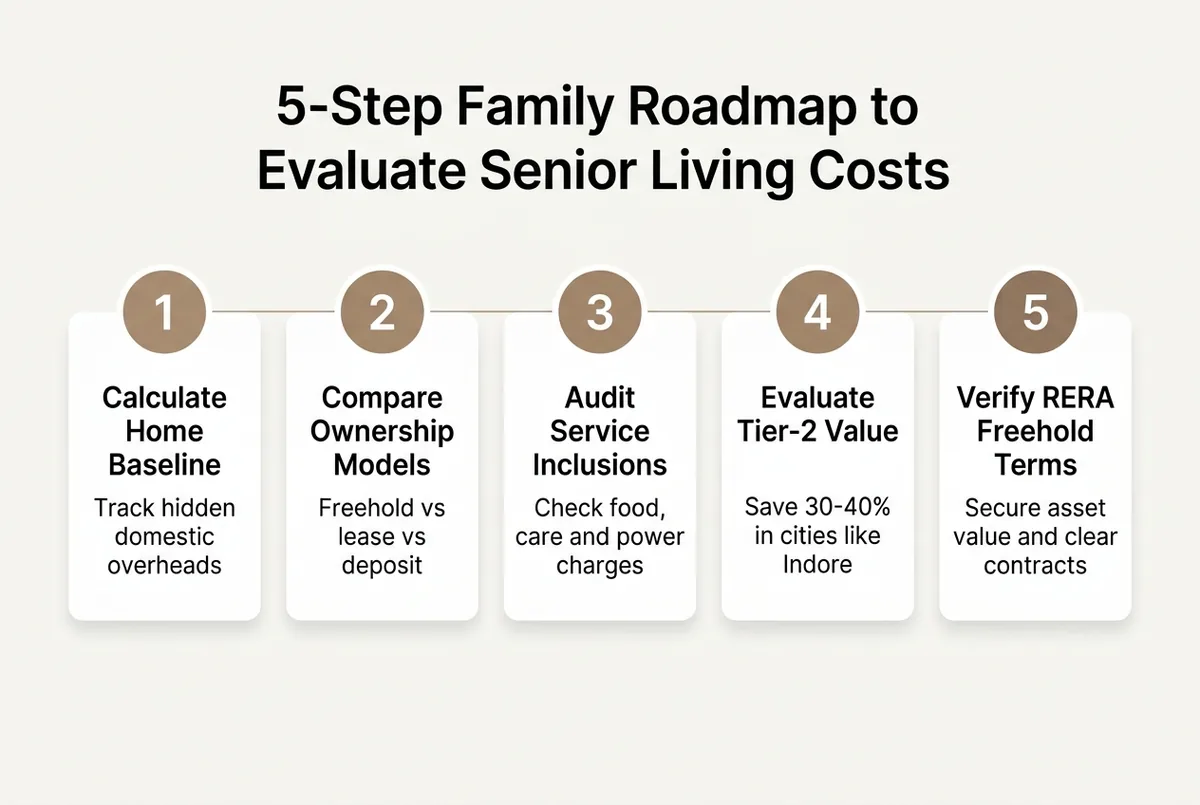
Families can evaluate senior living budgets through a structured five-step methodology: calculate current hidden home overheads, compare asset ownership contracts, audit line-item inclusions, evaluate tier-2 regional cost advantages and verify RERA title deeds and hospital integration.
Making an informed financial choice requires methodical evaluation. Follow this sequential roadmap to ensure complete budget transparency and lifelong financial peace of mind:
- Calculate Your Baseline Home Expenses: Document all recurring expenses over the past year, including groceries, domestic wages, maintenance repairs, utilities and private attendant fees to establish your true baseline.
- Compare Ownership Structures Before Committing Capital: Evaluate freehold purchase versus leasehold or deposit schemes. Prioritize 100% freehold ownership where your family retains legal title, capital appreciation and clear inheritance rights.
- Audit Line-Item Service Inclusions and Escalation Clauses: Review the maintenance agreement. Verify whether meals are billed on consumption or fixed quotas, audit power tariffs and insist on contractual caps for fee revisions.
- Evaluate Tier-2 Cost Advantages and Living Standards: Assess whether moving to regional hubs like Indore offers superior value. Calculate how lower monthly retainers stretch savings while providing clean air and immediate tertiary medical access.
- Verify RERA Registration and Hospital-Backing Credentials: Ensure valid RERA registration and clear title. Confirm healthcare is directly integrated with an established hospital network such as CHL Hospitals Indore for emergency and ICU security. Explore clinical protocols in our guide on how retirement communities handle medical emergencies in India.
FAQs
1. What is the average monthly expense breakdown for senior living communities in India?
The average monthly expense breakdown for senior living communities in India ranges from ₹30k to ₹50k for single residents and ₹45k to ₹80k for couples. This retainer covers daily nutritious meals, housekeeping, 24/7 nursing triage, common utilities, security and clubhouse wellness facilities.
2. How do retirement home maintenance fees in Indore compare to metro cities like Mumbai and Bengaluru?
Retirement home maintenance fees in Indore are 30% to 45% more affordable than metro cities, averaging roughly ₹30k to ₹55k per month for couples compared to ₹70k to ₹120k in Mumbai or Bengaluru. Lower operational overheads translate into superior healthcare ratios and larger open spaces.
3. What are the most common hidden costs in senior housing deposit models?
Common hidden costs in refundable deposit models include mandatory refurbishment deductions (10% to 25% of capital), delayed deposit refund waiting periods, compulsory meal minimums when absent, steep annual fee escalation clauses and separate charges for emergency paramedical response.
4. How does the cost of living after 60 in India compare between home living and senior communities?
Managing an independent home after 60 often costs roughly ₹40k to ₹65k monthly once cooks, domestic cleaners, repair handymen and emergency medical attendants are included. Purpose-built senior communities offer predictable, consolidated billing with professional staff, superior safety and 24/7 medical oversight at comparable budgets.
5. Why is 100% freehold ownership considered the safest financial model for senior living?
Freehold ownership gives buyers legal title, RERA consumer protection and full capital appreciation rights. Unlike rental or refundable deposit schemes where capital can be deducted or delayed upon exit, freehold assets can be willed to children, rented or resold freely in the open market.
Experience Transparent Senior Living at URJA by CHL, Indore
Planning a dignified, secure and financially predictable retirement? Book a private guided tour of URJA by CHL on Super Corridor, Indore. Explore our 100% freehold luxury residences, active Uma Club amenities and hospital-backed geriatric healthcare infrastructure.
Schedule a Campus Visit